


Beakuency welcomes Betsy Albert, Pat Knapp, and Tim Kennelty, who are members of the Taghkanic Community Forest Committee. The Taghkanic Community Forest is the latest addition to the Columbia Land Conservancy’s properties in Columbia County, and yet another wonderful place for local birders to explore. It is managed through the community forest model, a newer approach to public land management, in partnership with the Columbia Land Conservancy and local community members. The forest serves as a vital resource for environmental protection and public access, featuring trails and biodiversity monitoring led by local ecologists. By involving the community in hands-on activities like tree-planting events and educational nature walks and talks, the project has built a passionate community following. From the team behind it, you will hear how this came to be, the future of the project, and details of the grand opening day, Saturday, June 6th.
Visit The Taghkanic Community Forest page on Columbia Land Conservancy website for more information.
Register for the grand opening here.
This interview was recorded on May 14, 2026, and originally broadcasted on Wave Farm’s WGXC 90.7FM on May 23, 2026. It has been edited for length and clarity.
Interview Transcript
Mayuko Fujino: Thank you so much for taking time today to do this interview with me. Could you introduce yourselves first?
Betsy Albert: Hi, I’m Betsy Albert. I am the committee chair of the Taghkanic Community Forest. I also sit on the town board in the town of the Taghkanic, which is where the community forest is located. And I’m sitting next to my two awesome friends, Pat and Tim!
Pat Knapp: I’m Pat Knapp. I am the Director of Public Lands with Columbia Land Conservancy, and I serve as the CLC staff liaison to the Taghkanic Community Forest Committee.
Tim Kennelty: I’m Tim Kennelty, and I am a member of the committee, and I was on the board of the CLC and a volunteer prior to this.
MF: Could you tell us what Taghkanic Community Forest is?
Pat: The Taghkanic Community Forest is a 502-acre property in the town of Taghkanic that is protected, and will remain a natural area with public access. And what is really unique about it is that it is managed as a community forest, meaning there is a committee of volunteer committee members that help to make management decisions and set the vision and direction for the property. Much of the stewardship is also done by volunteers in a very hands-on and engaged way.
MF: This is the first one in Columbia County.
Pat: It is actually just barely the second one in Columbia County. (laugh) There’s another, in the town of Germantown, they just opened, which is really exciting. (The Theodore Robinson Community Forest) It’s something that we’re seeing a lot throughout the country. I think Vermont’s been doing it for a while, in a town-by-town and county-by-county way. But it is pretty new to Columbia County, and it is brand new to Columbia Land Conservancy. It’s pretty different from how CLC manages our other properties, and the biggest part of that is that we have brought in a big group of people. You know, when we’re thinking about the community part of the community forest, we’re thinking about everyone who’s impacted by having this community resource. So we’re talking about natural resource professionals, trail users, birdwatchers, you name it. We try to bring all of those voices to the table and have a really democratic process about how we are setting the direction and planning to manage this forest.
MF: So starting this community forest, it was the idea of CLC. And this idea came to you because…?
Pat: In part, just out of necessity. You know, I think that CLC is interested in impacting more land. We have kind of shifted into a much more hands-on management style on the lands that we own. We’re trying to use these sites as demonstrations. We’re really managing to improve the ecology of these places, in addition to offering recreational opportunities. And, you know, really, there’s just a capacity issue there. So, the best way we can continue to do this and impact more and more land and create more opportunities ecologically and recreationally is to have more support from the people who use these sites. And if we’re going to ask them to volunteer their time and their effort and make donations, then it seems like the best way to really engage the community is to also include them in the decision-making.
MF: The community around the Taghkanic community forest is clearly really excited, as evidenced by the number of volunteers participating. You mentioned, like, over 100 people come to volunteer. And the attendees at your event, you recently had a talk on butterflies and birds, I was there, and that was a very big group of people with lots of questions to ask. What do you think has been the key to generate this much momentum?
Betsy: I think it works two ways. I think one way is that we are in a community of a lot of engaged people who are already paying a lot of attention to the environment around us, and they’re interested in making it better, taking care of it, learning how to take care of it. And I also think that the CLC is such a powerful, vibrant force in our community. They do so many good things that people are aware of, that people already know about them. And when they start a new initiative, a lot of people know about it, because it’s in this community of people that are really into something like this, the idea of this community forest where it’s managed by a group of local stakeholders with the CLC as our guiding light. You know, because of their depth and breadth of knowledge, despite being a fairly small organization as far as the number of people they have, their resources are incredible. They know so much, they have so many good connections with people. I think that when we first put the application out to ask for people to sign up for volunteers, either in a steward capacity or as a committee member, we were flooded with applications. We had a steering committee, and we had to pick from that deep pool, and so we were able to put this really great group of people together to manage this, because everybody wants to be a part of this great thing that’s going on in our backyard.
Pat: And I would add, you know, it’s really hard to create momentum. When we started talking about this project, and when people realized that this property would become kind of a public resource, there was so much excitement, enthusiasm, and interest in participating. And the trick actually became, how do we maintain the momentum? And I give a lot of credit to Betsy and Tim both for communicating with all of the people of Taghkanic and the surrounding area to say, “this is happening – it’s happening soon – it’s happening now!”. When you’re dealing with a state funding source and a nonprofit land trust, you hear about this property being on the market, and then 2 years later you’re able to go, and it all feels slow. But we have packed the schedule and the timeline with so many different engagement opportunities, and really brought in a lot of people to make this happen. I think that it just felt like we’re hurtling towards opening day.
Betsy: A rocket ship. We’re on a rocket ship. (laughs)
Pat: And for the time that I’ve known Tim, when you bring Tim a problem, whether it’s opening a community forest, how do you build community, how do you build a forest, or, you know, in my personal life, I’ve brought things to Tim where I’ve been grieving, and his solution is almost always, without fail, “you should plant a tree.” (laughs)
Tim: That’s very kind of you. (laughs) We kind of knew we had a pretty good feeling about this, because we had this kind of core group of people who, as Betsy said, were super engaged. And we’ve had these talks, we’ve had events, and we knew that, you know, not just the same people, but large groups of people came, so we knew that this might be something that would really light the fire under them, and it really has.
Pat: We followed Tim’s advice, and we planted trees, and everyone got their hands in the dirt, and put their roots in the ground, and now everyone wants to come back and continue to care for those trees, and continue to be a part of this forest that they helped to build. And I would say these types of engagement opportunities where people can really put their skin in the game. Make them want to keep coming back.
Tim: And I do think if there are other organizations who are interested in doing this, that first event that we had, a tree planting event, just seemed to be the glue that brought everybody together. People were joyous that day, and it’s just something that you can do to make a difference, and you could see it in people’s faces. We were talking the other day about how people met each other who didn’t know each other and were planting a tree together, and you just made bonds.
MF: You said there had been a core group. How was that core group formed in the first place? It sounds like there had been talks and everything that something Tim and Betsy had been organizing?
Betsy: Taghkanic has had a Conservation Advisory Committee for a number of years. We also have a Climate Smart Communities Committee. Two committees have melded together over the years, and it’s a core of about maybe 10 to 15 people who have their pulse on climate mitigation actions. We work together to establish Taghkanic as a bronze community, if you’re familiar with that state program. We did a lot of things, like we installed solar on our highway garage, and we put heat pumps in our town hall. We did a number of climate mitigation actions.
That sort of led into paying more attention to the natural world around us, and what climate change is doing. And then we would sponsor talks at our local firehouse. And people just started to come to them. The surrounding communities all have similar organizations, and we’ve started to collaborate, and people just sort of got the word out. And, you know, Tim has a bit of a following. People that Tim has made a connection with over the years started to come. It’s just grown. You know, our presentations, the last one had over 50 people at it. We have just established a lot of people who are paying attention because we put good programming on.
Tim: Well, and the reason I think we could put good programming on is because we did have this core group of people, so we knew that the speakers would have a good audience, and they were willing to come. And we do have this wealth of expertise in the county about all different things. Birding, I’m sure you know, and forests, it was pretty easy to find these people.
MF: When people try to do initiatives, there’s almost too much emphasis on social media followings, but to hear you talk about how this developed is really more… sounds like human connections first, and that takes time to cultivate it and develop, and there’s no shortcut to get people engaged and participate and excited in it. But I also did notice that there’s some, logistically, really smart about how this committee is run. Like, I thought it was kind of cool how you’re using the Google Groups.
Betsy: This is Pat. Pat does all the cool stuff. Pat really runs the show, he just kind of makes us feel like we’ve got some part in it. Pat does a tremendous amount of stuff. His organizational skills are unbelievable. You know, he has been the mastermind between these two events. Just the logistical stuff that he has to deal with, and he’s the Director of Public Lands at CLC, so you can imagine he’s also looking at a lot of other things as well. They’ve got this great project at High Falls, et cetera, et cetera. Anyways, Pat’s the one that has put all the structure and the framework together for this.
Tim: And when you think about that first tree planting, it was Pat again, who really managed all of this. Betsy and I kind of, like, scratched our heads and said, we’re going to plant over a thousand trees. How are we actually going to do that logistically? And they had a plan to do it. Pat and his wonderful staff had a plan to do it, and it went very smoothly.
Betsy: The day unfolded seamlessly, and it was Herculean. I mean, they augured 1,600 holes beforehand. I mean, they schlepped stuff. What they had to do was unbelievable. And then everybody came waltzing in and stuck a tree in the ground.
Tim: It was all prepped for people to come in and have a good time.
Pat: I think when they say Pat, it also just kind of means CLC. I’m, like, the conduit for CLC to this committee, but, you know, there’s a really good staff and board at CLC. The board really helped us develop the bylaws for the committee, which really acts as, like, guardrails, that hopefully the committee will never even really need to bump into, because I think that we’ve put together a really good group of people who all share a lot of common goals, and the direction seems pretty clear. We’re going to have some facilitated conversations to set. More of a strategic vision and master plan for the site. So the more everyone is kind of on the same page, the less we need those guardrails, and it just kind of feels like we’re all just having fun, kind of working towards a common goal.
Betsy: By and large. We should definitely mention Heidi Bock, because she was instrumental in all of this as well. And Jen Rosette, she is the Conservation Education Manager. Jen has a tremendous amount to do with putting these events together. These women both have superpowers. It’s really been great. And we’re trying, as part of this model, to take some of the burden of the work off of them, right, so that they can do more, which is another one of the facets of this whole thing, getting management and stewardship of this forest in a different group of hands. So we’re trying to deal with some of the day-to-day stuff, but we fall back on these guys all the time.
MF: I was impressed by how it’s structured and how there’s clarity there, because I’m still relatively new to the area, you know, I wouldn’t know a lot of people here. But I could get a clear sense of, “oh, this is happening soon, these are what the people like, and they’re very excited”, it’s all there in the Google Group, so I quite enjoy reading the threads.
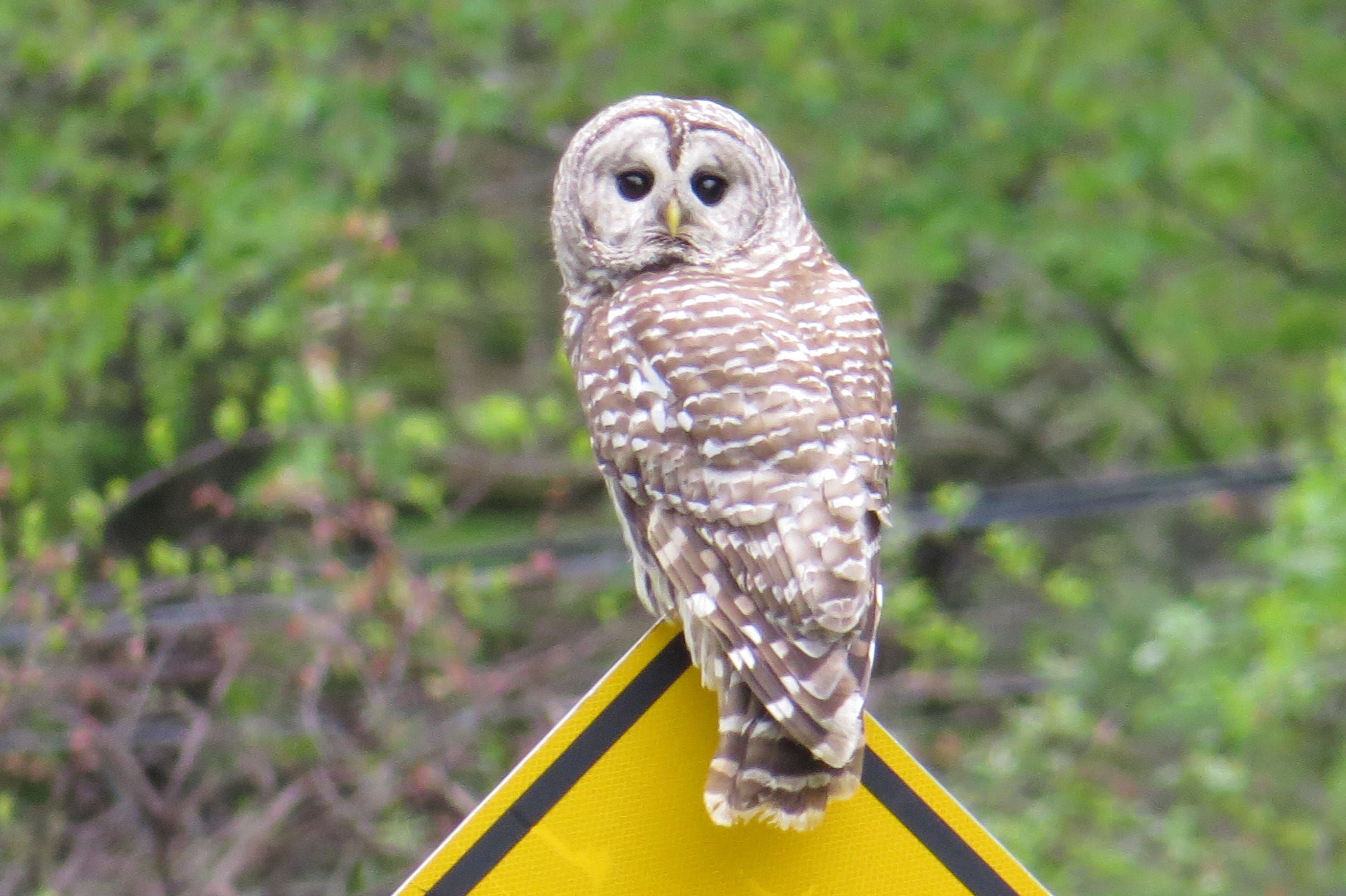
MF: You chose Barred Owl to be the mascot. Why did you choose Barred Owl?
Tim: We didn’t really choose the Barred Owl, the whole group chose the Barred Owl.
Betsy: We voted on it. We voted on it at the tree planting. We had a list of different animals, birds, and plants. And we ended up with the Barred Owl.
Pat: CLC’s other 10 properties each have a mascot, and it’s typically a plant or an animal that you might run into at that property. For this property, it was fun to kind of turn that to a vote. We gave a little bit of a justification for each thing that we might be voting on, and Barred Owl won, resoundingly. What’s been fun is, there’s one kind of potential trail that we’ve flagged out and mapped, and then before we did the work to open the trail, we worked with Farmscape Ecology Program and Gretchen Stevens who’s one of our committee members, also the Director Emeritus of Hudsonia. And they did a survey of that potential trail to make sure that we weren’t disturbing any sensitive habitats, or going through any rare or threatened plant species. In Gretchen’s survey, she observed a Barred Owl on the future Barred Owl Trail, so it felt serendipitous, yeah.
MF: Good. So you have it there.
Betsy: Yeah, the guy, the stewards working on the trails have seen Barred Owls twice now, I think?
MF: Because birders would expect to see it if you put it as a mascot.
Tim: Don’t worry, it will be there.
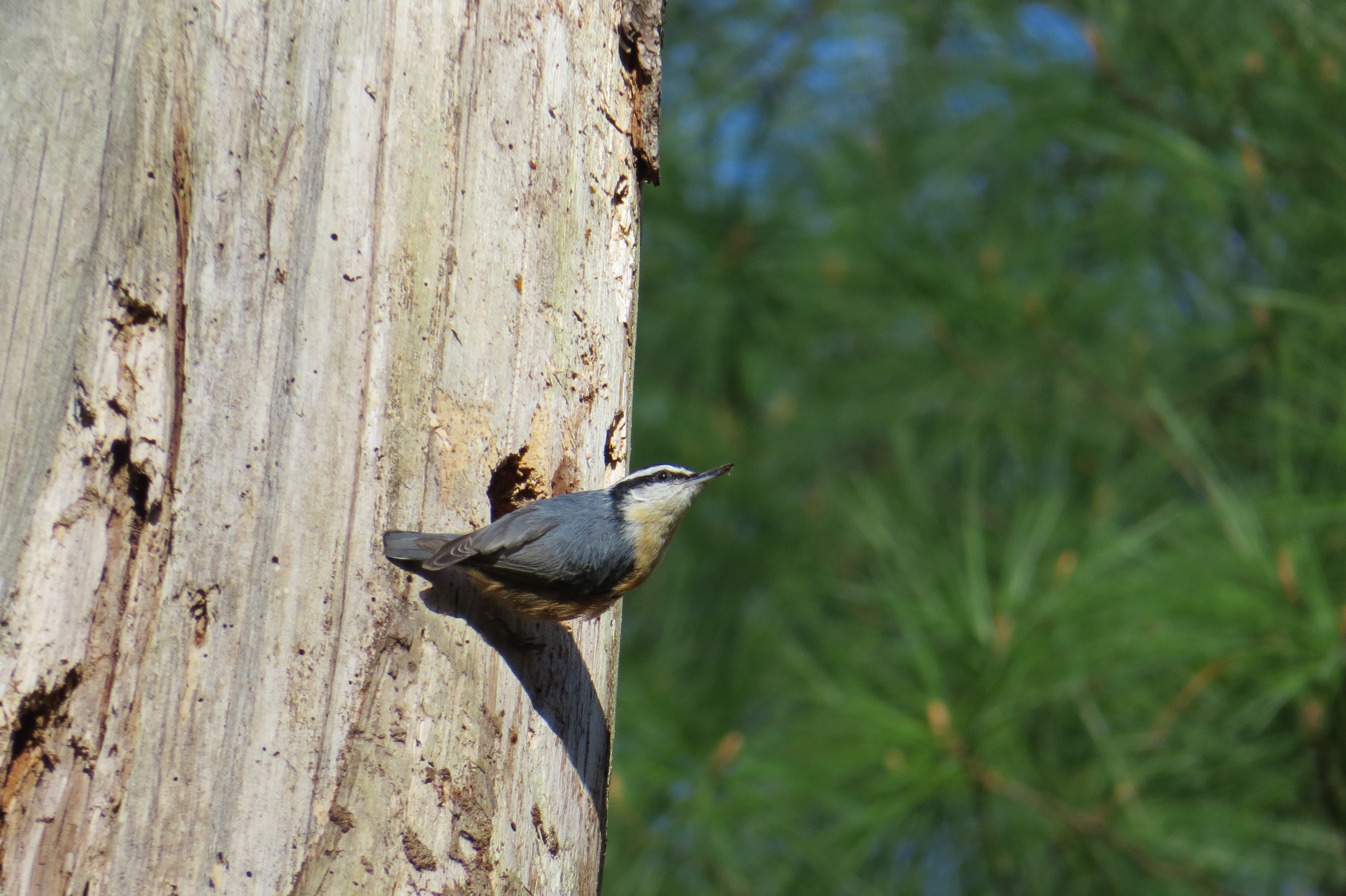
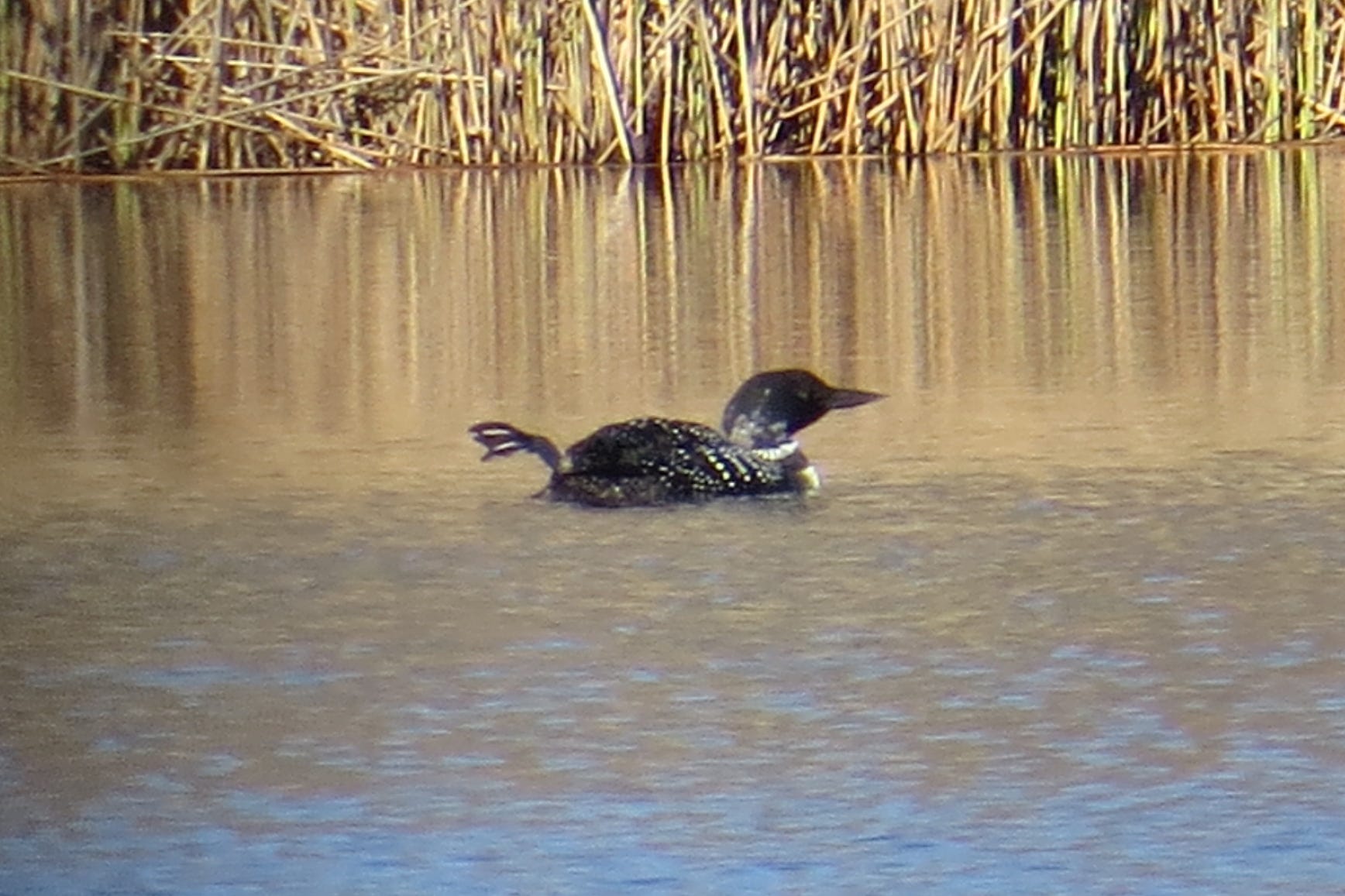
MF: Yeah, that’s good. I remember going to that location way before. We had a really good look at the Red-breasted Nuthatch. And it was nesting, and it was great. And I think we had a Common Loon in that little pond. Have you got Common Loon since?
Pat: That same winter, they were hanging around for a couple weeks, but I think they were just passing through. So after you all saw the loons, we went out there and got to take a look at them, too.
MF: I’m very excited to go back there for birding purposes. Will there be a…
Tim: We wanna come with you.
MF: What’s that?
Tim: We want to come with you when you go out there birding.
MF: Yeah, I wanna go with you guys. Are you planning on doing bird walks, I hope?
Betsy: Yeah, June 6th. Be there or be square.
Tim: Yeah, that’s right.
MF: Oh yeah, that’s the grand opening.
Pat: And that’s going to be centered around a BioBlitz, so we’ll be working with experts in different fields to get a baseline on everyone that we share that space with. And Will Yandik is going to be leading a bird walk as part of that.
MF: That’s great. Do you want to give us a date and a time of the event, again? June 6th, that’s Saturday.
Pat: 10 to 3.
MF: And when is Will doing the bird walk?
Betsy: The walks are going to begin at 11, and end at 2, at some point during that window.
Pat: But we’ll have a schedule of events as we get closer to the event.
Betsy: Shaping it up now.
Pat: If people are interested in signing up for the opening day on June 6th, you can find that on CLC’s event page, columbialand.org. And then find the events calendar.
MF: And there’ll be raptors, I heard.
Betsy: The Raptors station will be at 1 o’clock in the afternoon.
MF: Who’s bringing the raptors?
Pat: Raven’s Beard [Wildlife Center.]
MF: That’s very cool. And, in the future, after Saturday, June 6th, I hope there’ll be, like maybe Will Yandik can lead regular bird walks.
Tim: If we can convince him. He’s a busy man. Maybe you will. We’re inviting you now, officially. We’re putting you on the spot. Are you gonna do a regular bird walk there for us?
MF: Oh, I’d be happy to join.
Betsy: No, we’d like you to lead one.
MF: Oh! Well, I should scout.
Tim: You wondered how, you know, we get all these people. It’s because we pressure them on radio shows.
MF: Right, publicly. (laughs) I see that’s how you got the momentum.
Betsy: I would like to mention that on our BioBlitz, not only are we having Will Yandik do birding, Gretchen Stevens is leading a plant walk, Helen Forgione is also leading a plant walk, we’ve got a salamander walk being led by Jim McDarby, teacher at Hudson High School.
Pat: And then separately, we’ll have a walk with our forester, who’s been helping us develop a forest stewardship plan. So we’ll be able to talk to folks a little bit about that, and get some more feedback about some big projects that could be coming up.
Betsy: Addison Kubik from PRISM is gonna be leading us on a walk, looking at invasives. The invasive clearing work that we’ve done, healthier areas of the forest, kind of helping people identify problem areas so that when they do go in a stewardship capacity, they can start working to make the forest a better place.
MF: How do you envision the future? Like, say, 10 years, 20 years?
Betsy: Well, that’s the big question. You know, one of the biggest problems that these community forests have is sustainability, keeping people interested and engaged, and that’s one of the big challenges. We’re coming out of the gate really strong, and we’re all trying to do everything we can to keep the momentum going, and I think that has a lot to do. We have to keep getting people engaged. So talking to people like you, helping us get the word out, is a really, a great benefit to us, and we appreciate that.
MF: Are you planning to get students involved?
Betsy: That’s one of the things that’s on Jen’s plate. She’s doing sort of community outreach with some of the schools and some of the youth groups around here. You know, there are a lot of interesting groups like Kite’s Nest, the folks up at Hawthorne Valley, the local schools in the area. We’re gonna try to do outreach to all of those. If anybody’s listening, we would love to work with you, partnership in some way, with any one of those groups.
MF: Thank you very much.


