


Beakuency welcomes Anne Bloomfield, the manager of the Applied Farmscape Ecology program at the Hudson Valley Farm Hub in Ulster County. The Hudson Valley Farm Hub is a demonstration farm that bridges the gap between wildlife biology and sustainable agriculture through collaboration. She shares a project whose purpose is to identify recommendations that hop farmers can adopt within their normal operations to help the American Kestrel, a falcon whose habitat relies on meadows, pastures, and agricultural fields.
This project is a strong example of bringing wisdom together to find practical solutions that benefit both the environment and a farm’s productivity, which Anne pursues throughout her work. Her words inspire environmental optimism, encouraging individuals to build empathy for nature through observation and to believe in the possibility of a positive relationship between humans and the land.
Hudson Valley Farm Hub https://hvfarmhub.org/
Applied Farmscape Ecology Program
https://hvfarmhub.org/applied-farmscape-ecology/
What can I do to help birds - Hudson Valley Farm Hub https://hvfarmhub.org/what-can-i-do/
Bobolink Beer https://www.zerogravitybeer.com/short-fills/bobolink
This interview was recorded on March 31, 2023, and originally broadcasted on Wave Farm’s WGXC 90.7FM on Apr 22, 2023. The transcripts have been edited for accuracy and clarity, with minor additions made in collaboration with the interviewee.
Interview Transcript
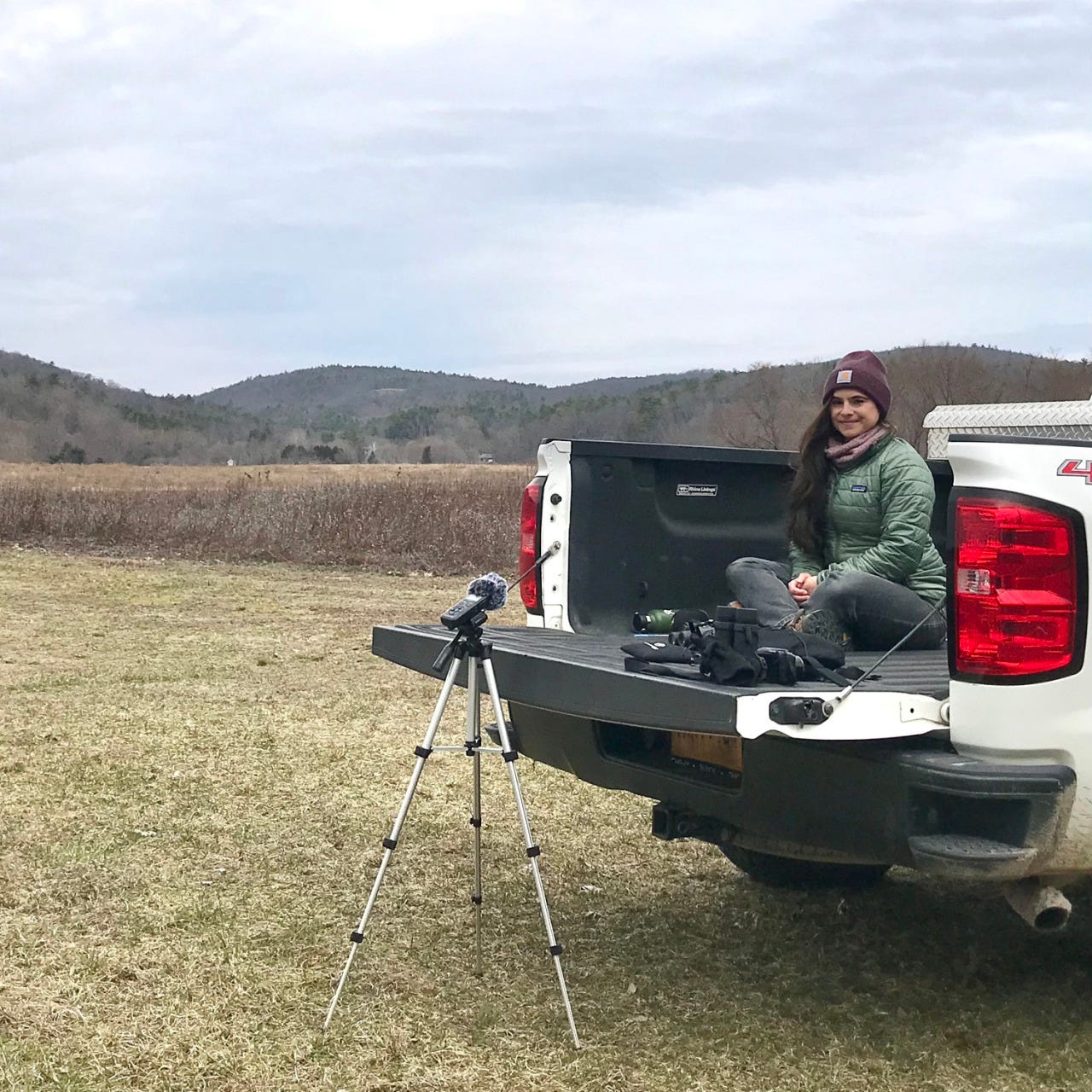
Mayuko Fujino: Thank you for taking time to speak with me today. Could you briefly introduce yourself?
Anne Bloomfield: I’m Anne Bloomfield. I’m originally from Albany County, New York, about an hour and a half north of here. My background is in wildlife biology with a focus on birds. I also enjoy hunting, fishing. I really enjoy raising chickens at home and gardening. But , as far as my work here, I’m the Applied Farmscape Ecology program manager here at the Hudson Valley Farm Hub.
MF: Could you tell us what the Hudson Valley Farm Hub is?
AB: The Farm Hub is an education and demonstration farm. It’s about 1,600 acres located in the Hurley Flats in Ulster County. And we could spend probably a whole show just talking about that one question, but I’ll say quickly that, we have a variety of programs centered around agronomic research, education and training, and food access, and then the Applied Farmscape Ecology Program, which my colleague Teresa Dorado and I run.
We do about 35 acres of mixed vegetables and then about 1 to 200 acres each of grain, corn, soybeans, dried beans and small grains. We transitioned from a multi generation conventional sweet corn operation to an organic, diversified operation. Next year will be our 10 year anniversary as the Hudson Valley Farm Hub here in Hurley.
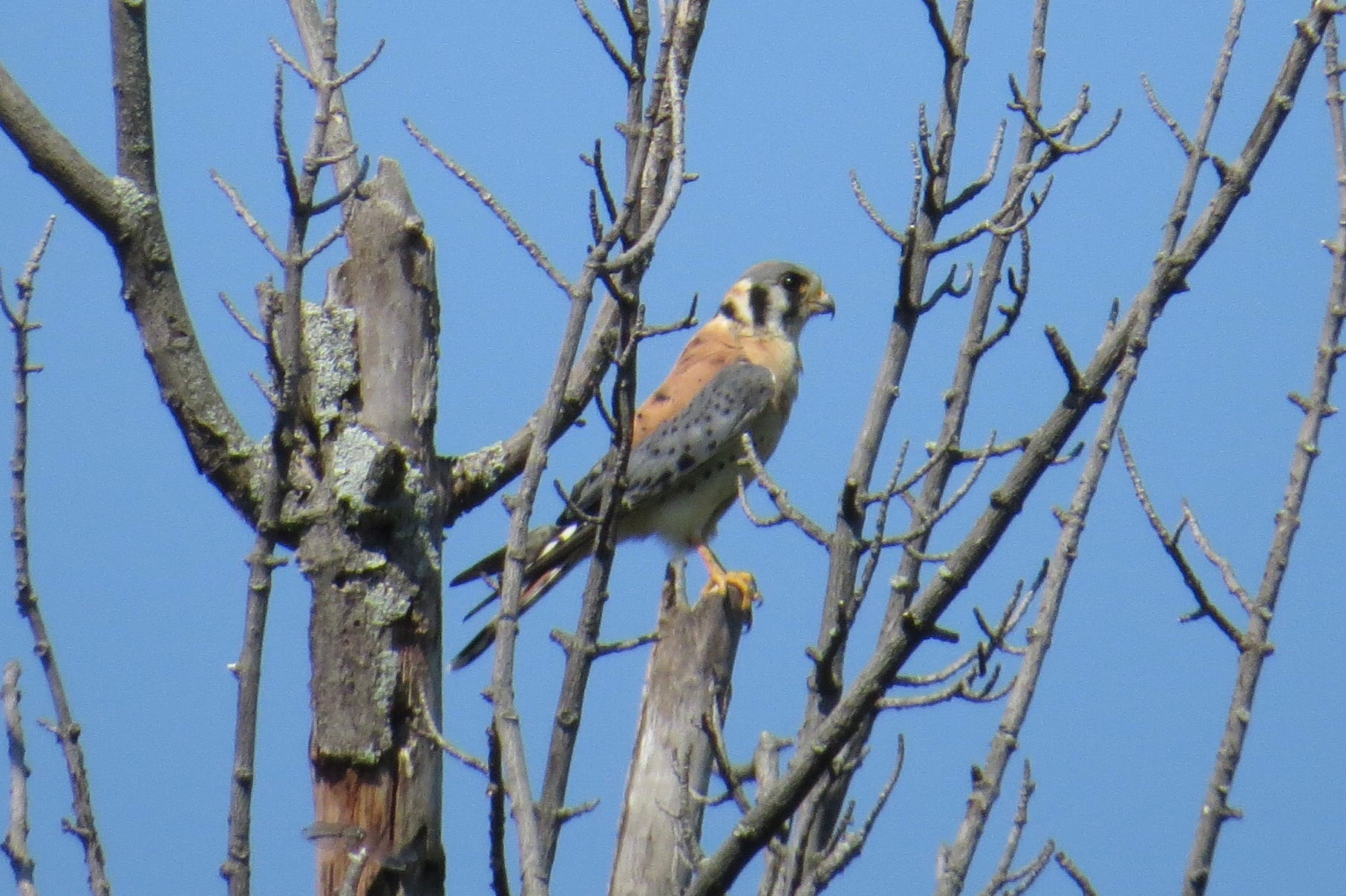
MF: It took me a little while to understand the bigger picture of the operation, and I still don’t think I fully understand it. But that American Kestrel habitat management in the hop field, one of the case studies you posted on your website, I think it helped me at least understand part of your mission and operation. So I wanted to ask you about that particular project. I thought it would be helpful for the listeners who don’t have much knowledge in farming like myself. And so the kestrels, first of all, the population is declining.
AB: In the Northeast and New England, both populations are in a slight decline, and also, interestingly, kestrel body size is decreasing, which there’s some theories as to what’s causing that, but not a definitive answer.
MF: And this case study is to help kestrel conservation.
AB: Yes, with the idea being, how can we provide nesting habitat for kestrels, recognizing that nest cavities alone aren’t going to solve larger issues, but they’re one tool in the toolbox that puts us in the right direction.
MF: So I want to start with some super, super basic questions. Such as, what are hops?
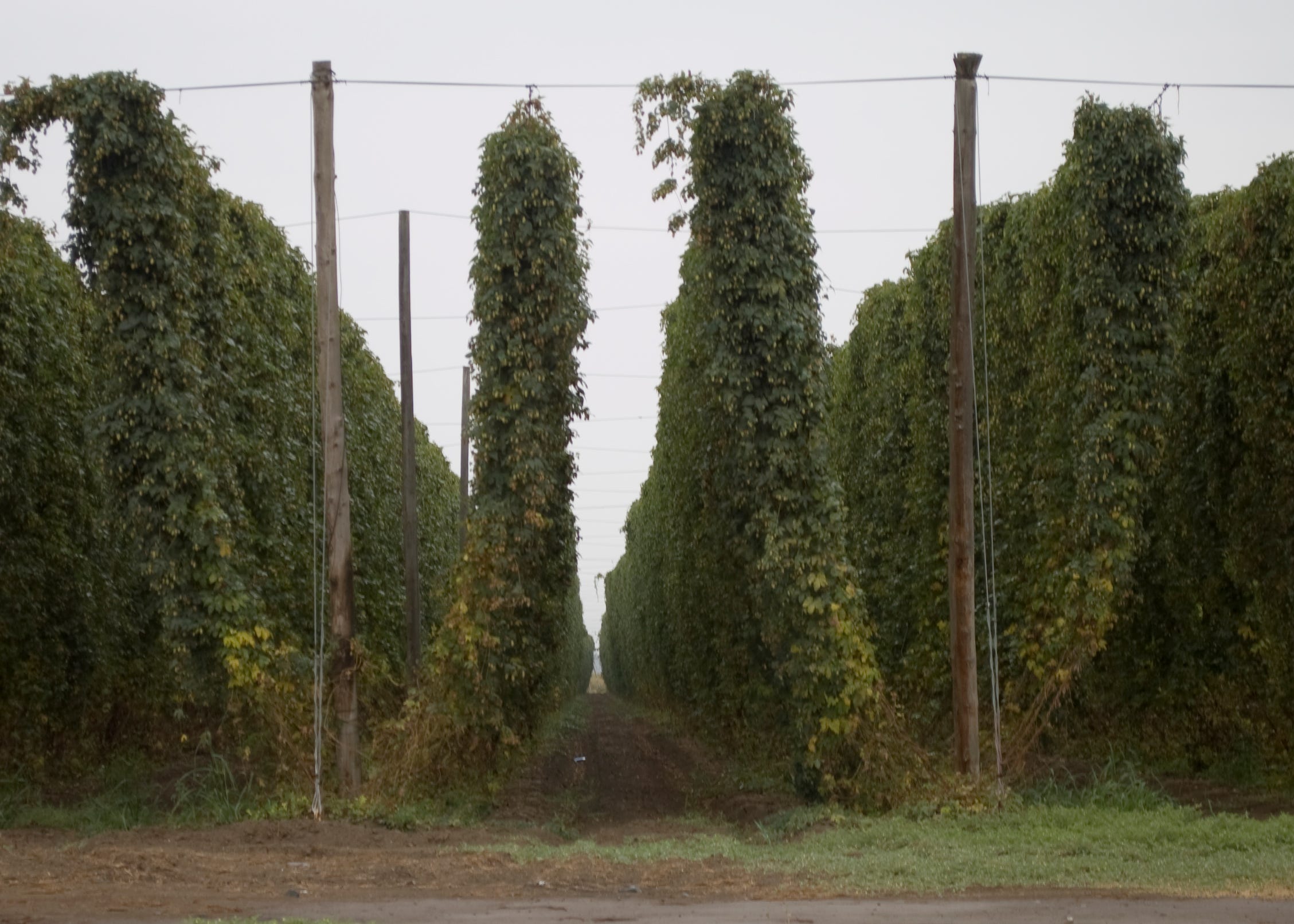
AB: Previously to the Farm Hub, I was a field biologist. I didn’t have a background in agriculture. I had a little horticultural experience working with flowers, and I like to garden at home, but it’s been a really important and significant learning experience. So, it might seem like a basic question, but when I arrived at the Farm Hub, I didn’t know how hops grew. I will do my best to articulate what I now know. Hops are — Gosh, there’s so many things to say about hops, but basically they’re a climbing, vining plant, and they have a beautiful, citrusy, piney, floral aroma.
And they’re most commonly known for their use in the bitterness in beer brewing. They also have some medicinal qualities, but when people think of hops, they mostly think of beer brewing. And they can grow 20 ft in a year. And so in order to grow them, you have to have these big poles or posts, and then some sort of twine or line infrastructure that the vines can climb as they’re growing.
They’re this bright green color. They’re actually closely related to cannabis. The hops themselves are the flower, and they’re these bright green, fragrant, sticky flowers.
MF: So this hop field would already have those poles, and that’s where the idea came from, that you can install a nest box for kestrel on top of those poles.
AB: Yeah. And I can’t really move forward with the story without introducing Jayne Henson. Jayne was growing the hops. An aspiring birder, also a musician. She has an amazing ear. And when she first started learning bird songs, she would instantly hear a bird once and then remember it. To this day, I don’t think she truly realizes what a gift that is. But I wouldn’t say Jayne is a birder. She’s a farmer. Also one of my hunting buddies. We hunt turkeys together.
Jayne was a farmer trainee here at the Farm Hub in our educational program. And at the time, each of the trainees had a crop project, and she was growing hops for her project. It really took her agricultural knowledge and my ecological knowledge together to pull the project off. Farmers already have what they need to get high to grow the hops. They already have a way to get up to the top of the post to do the work, to secure the lines, and so on and so forth. So we thought, well, would it make sense in the Northeast for people to put kestrel boxes in a hop yard to provide nesting sites? — I should also mention kestrels are cavity nesters — so the nest box kind of looks like what you would think of, like a bluebird house would look like, but bigger. Cavity nesting birds put their nests in natural cavities like holes in trees. But they will also use artificial cavities like a bird house.
So, we thought, can’t we put nest boxes at the top of hop poles and provide nesting habitat? But there are a lot of other questions, like, what activities happen in the hop yard, and are those going to cause disturbance at the wrong time? Any organic pesticides that are applied, are those going to impact the kestrels? Is that going to be at the wrong time? When is harvest time? There were all these questions that we had to troubleshoot before we could push the project forward. So, we talked with toxicologists about pesticides. We sat down and had meetings about the timing of activities in the spring and summer, when kestrels are nesting. And so we figured all of that out, crossed the t’s and dotted the i’s, and said, yeah, let’s try to do this.
MF: So the idea for this kestrel habitat management project is that, if you’re growing hops, you already have this structure. And you can just operate in more bird-friendly farming practices.
AB: Yeah. For growers interested in farming with birds in mind.
MF: I’m imagining it to be very empowering for whoever is already running commercial private farming and wants to do better in some way. But I think people are so busy trying to make ends meet.
AB: Yeah. So, how can we find easy ways together that work for everyone? As a wildlife biologist, I wouldn’t expect a commercial grower to sit down with some long management plan and sift through hundreds of pages and then figure out the right dimensions for a nest box. It really, truly is a team effort. For example, in this case I needed to understand how to grow hops.. And then bringing my knowledge to the table: “here’s the right dimensions for the nest box. Here’s the times you want to avoid disturbance.”
And I find that in my writing, this comes up over and over. I’ll be writing a piece for our newsletter or whatever it might be, and somehow my conclusion always circles around this idea of people bringing their own knowledge to the table and coming up with solutions together. And it’s one of the most powerful things about working here.
A good example is grassland breeding birds like Bobolinks that nest in hay fields. The textbook wildlife biologist reply might be — don’t mow your hay field until after July or August. That’s a non-starter for farmers. Because a lot of farmers, especially dairy farmers who need high nutrient hay, are haying in May and June, right when the Bobolinks are nesting. And so, you know, the farmer might say, well, I can’t wait until July or August. By that point, the nutrient quality of the hay has started to decline.
And then the biologist might say, well, but the Bobolinks are nesting then. So, yeah, I guess prior to the Farm Hub, I sort of worked in these circles where there was tension between some of these strategies. But the further I get along in my career, it’s clear that we can’t operate that way. We all have to come to the table with our wisdom. I’m not a farmer and I don’t pretend to be, but I need to do enough learning so that I can get to the point to understand where those pinch points are and how we can work together to find them. And it’s hard. I’m not going to sugarcoat it. It’s not always easy.
MF: I think even for consumers too, people have a lot of things going on in their lives, so sometimes to do the right thing is not easy. But when there’s a specific plans or steps or one action that you can take. It’s better than no action. To take that one simple action if you can, makes a lot of difference.
AB: Yeah. And you know, there’s a lot going on here at any given time and we work towards these goals. Whether it’s grassland breeding birds in the field here that we’re sitting next to, or the kestrels, or our turtle project, we just keep moving forward. And sometimes, it’s hard and we take a couple steps back and we falter, but then we just regroup. But what’s important is we keep moving forward and keep working towards it together. And sometimes it’s just incremental steps. And I think that sometimes we want to feel like we can solve these issues overnight. But yeah, it’s important to just keep chipping away at it.
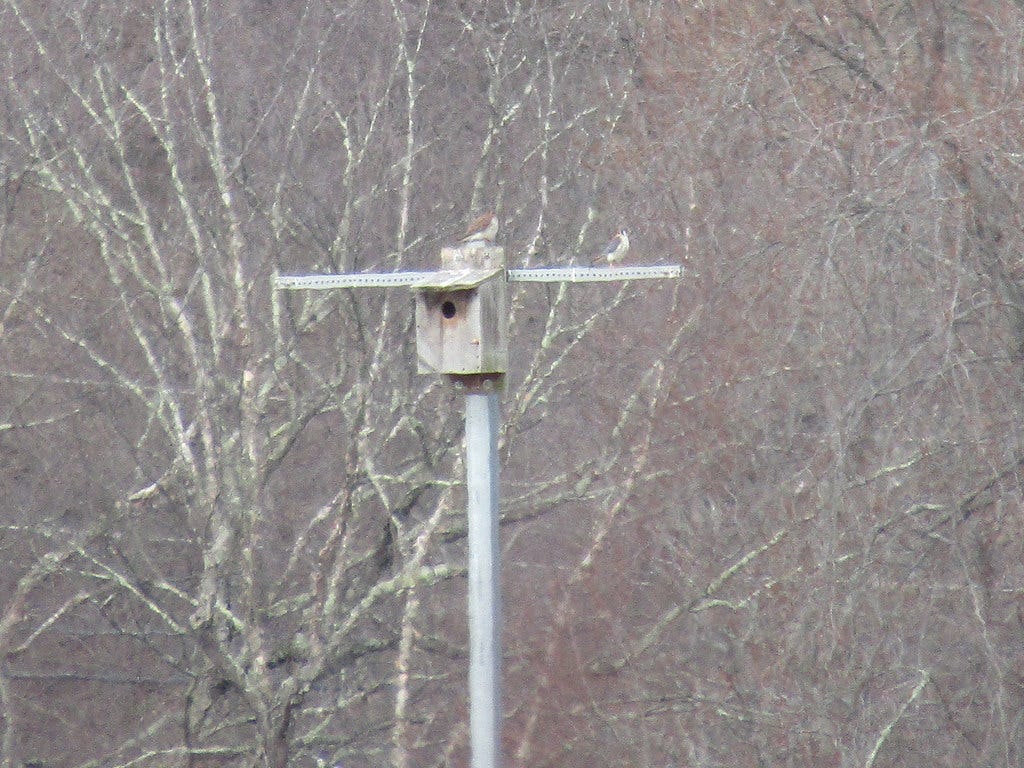
MF: Well, we just drove by the former hop field and we saw one pair of kestrels, luckily for me. So would there be one nest box for all of this field?
AB: Yeah. When the hop yard was still in the location we drove by, there was just one nest box. And then, we have a second nest box further north of here that is on a post. It’s not associated with a hop yard or any structures. We have two nest boxes now at the Farm Hub.
And actually prior to us having nest boxes, the kestrels would come through, but they wouldn’t stay. And at the time, I was talking with a raptor biologist, Zach Smith, and he thought, you know, it’s got to be your lack of natural cavities. He thought if we put cavities here, the kestrels would stay. And he was absolutely right. The second we put nest boxes up, both of them were occupied, which, sometimes, it can take time for that to happen. But they really…
MF: … needed housing. I can relate.
AB: Yes. (laughs)
MF: You know, it just occurred to me. So Jayne, she’s growing hops for a specific brewery.
AB: Yeah, Arrowood Brewery in Accord. They are a brewery, but they also grow hops on site. And Jayne is now managing the hop yard there. And then her farm, Transgenerational farm, is right next to that. She’s doing a lot of awesome stuff over there. And they actually have bluebird boxes in their hop yard over there at Arrowood. I think for where the hops are there, they wouldn’t get kestrels because of the shape and size of the field. But yeah, that’s another idea, you could put Eastern Bluebird or Tree Swallow boxes.
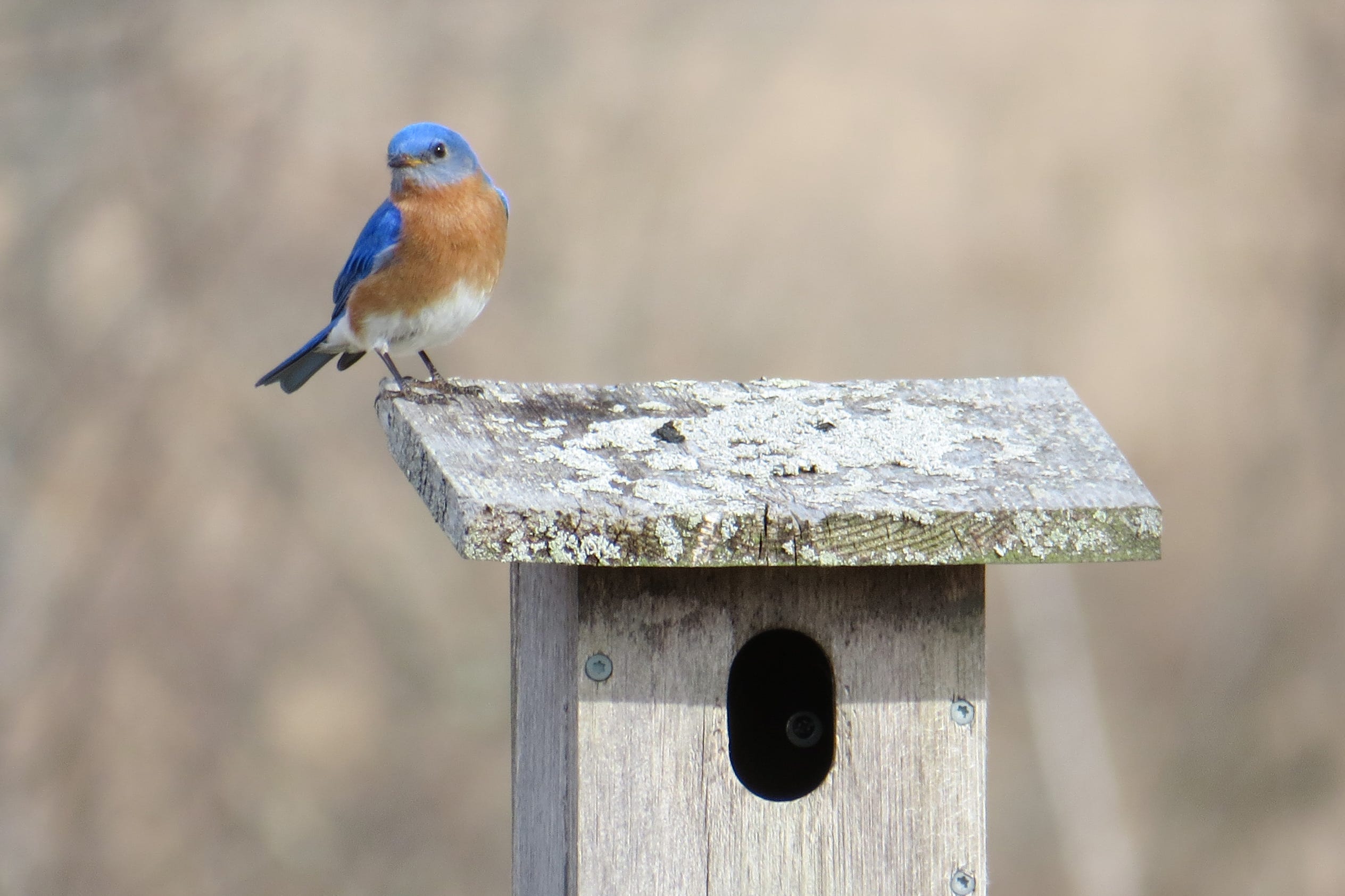
MF: There are a lot of microbreweries, it seems like it’s trending. I wonder if they’re growing their own hops. I’ve been hearing lots about bird-friendly coffee. I haven’t heard of bird friendly beer just yet.
AB: Well, when Jayne and I got the idea, I went to look for a case study because I thought someone must have done this before and we couldn’t find anything. If there’s anyone out there that knows of someone else putting kestrel boxes in hop yards let us know. I feel like I looked this up, and there might be one other place. It was after we did our project.
If there’s other folks out there interested in putting up a kestrel box to see if they have success, it does take a little bit of, like I said, thinking through, like pesticide materials and timing of activities.
MF: If a listener is running a microbrewery in New York State, they can maybe reach out to you?
AB: Yeah, totally. I can’t say I have all the answers because like I said, we didn’t get enough years of understanding the disturbance questions before the hops were removed. But I could definitely point them in the right direction of things to consider where to get the right kind of box, things like that. So yeah, for sure.
MF: That’ll be interesting. I would love to have some local bird friendly beer.
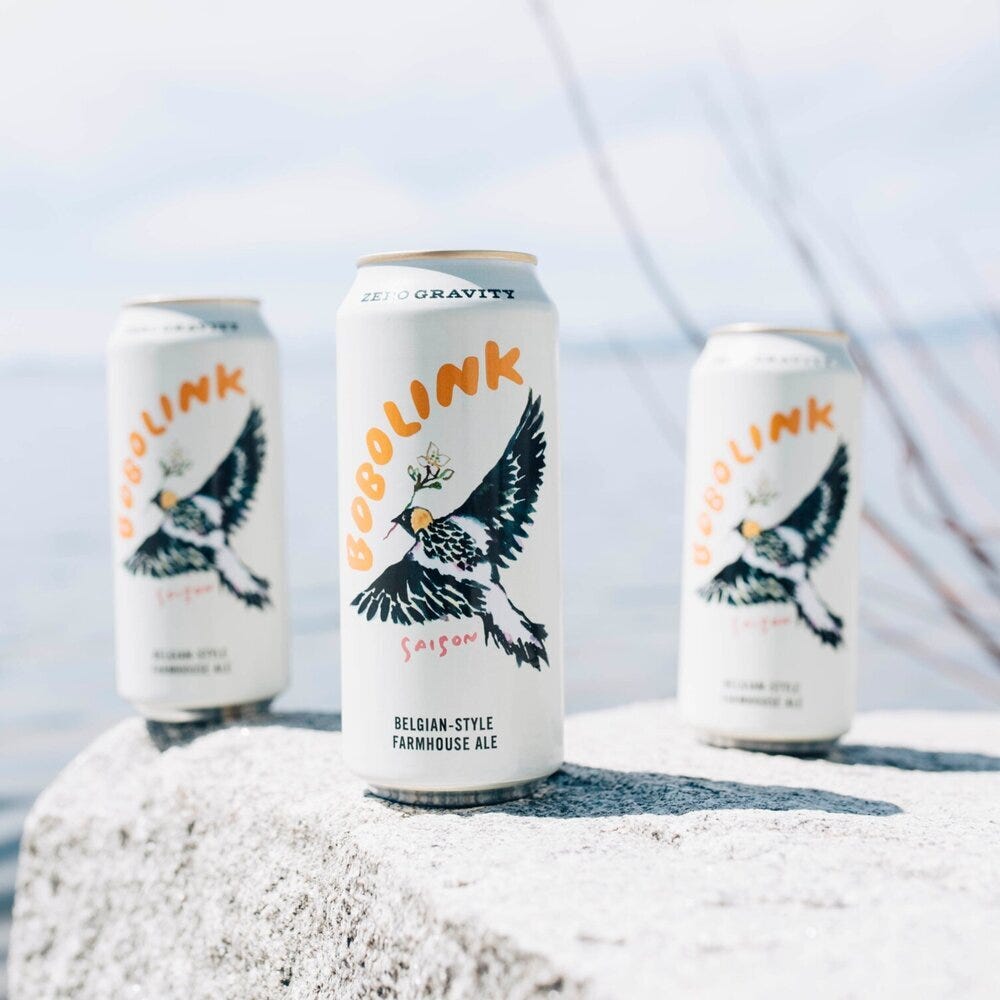
AB: Well actually, Noah Perlut is a researcher here in the Applied Farmscape Ecology Research Collaborative. He studies a grassland bird called Bobolink in the field we are sitting next to. He is involved in another project, which is not in New York State but also focuses on Bobolinks. He has a relationship with a brewer that makes a Bobolink beer. And it’s delicious. Just as a side note, I think some of the proceeds from the purchase of that beer help to go towards grassland bird conservation work. So it could be a thing for kestrels. You never know.
MF: I’ve been reading a book called “Birding in the Hudson Valley” by Kathryn Schneider. She mentioned that the grasslands of the Hudson Valley are not natural. They exist because humans cleared the forests for agriculture. So, to learn that the landscape we see here now has been shaped by human activity over centuries, it really made me understand how much influence we actually have as a human being. And I thought the lack of understanding of our own impact can be a source of short-sighted actions, like, even littering. You don’t think you matter, what you do matter, if you don’t know how much impact you actually have. Also I’m thinking, maybe it relates to how so many people feel they are powerless, that there’s nothing we can do about it.
So it was really inspiring to read about the process of your very specific approach, and the sense of optimism that you wrote about in your article that you felt from working with one another. So I wanted to ask you to speak about this optimism, where you get it and how you keep it going.
AB: Yeah, it’s a great question. And there’s a lot there. I’m reminded of a scene from the book Braiding Sweetgrass — that’s a great book if you haven’t read it — where the author is asking her students something along the lines of, do you think humans can have a positive impact on the land?
And her students say, well no, of course not. Look at all of this destruction that humans have caused to the Earth and how extractive we’ve been and how damaging. The author Robin Wall Kimmerer is a Potawatomi botanist and the director of the Center for Native Peoples and the Environment at the State University of New York College of Environmental Science and Forestry. Anyway, basically she’s asking her students to imagine a world in which humans do have a good relationship with the land or even a beneficial relationship with the land. And she goes on to explain in the book how humans haven’t always been this, extractive, damaging species.
There are cultures that still exist and times in our history where people did have a positive impact on the land and a different kind of relationship to the land. And so, step one is imagining that it’s possible, imagining that it’s even possible to think about things differently and thinking, how do we get there?
How do we put our wisdom together to get where we need to go? I was just talking to my coworker Andrew Casner this morning that works in the field crops team here, and we were talking about how we have crops planned for some fields here at the Farm Hub, where some of the timing of the activities to grow small grains are not super compatible with the nesting season for turtles. And so, you could say, “oh, this is a terrible idea. We can’t have this crop here. It’s going to be terrible for the turtles. There’s nothing that we can do.” But if instead you kind of flip that narrative and say, okay, this is the crop that’s going to be here. This is the situation we have. You have your knowledge, I have mine. This is when the turtles are going to be nesting. What can we do? And sometimes it’s really hard, keeping your optimism going when we live in a world where there’s a biodiversity crisis and a climate crisis and all these things, habitat loss and yeah, I’m not here to pretend that I am optimistic all the time. But for the field of study that I’m in, I feel surprisingly optimistic. And it’s a great question. I don’t honestly know where it comes from because a lot of the news about wildlife, especially birds, insect-eating birds and grassland nesting birds and the declines we’re currently seeing as well as habitat loss is very depressing.
But if we don’t have our optimism, what do we have? What, we’re just gonna stand by and say, well, I guess there’s nothing we can do. That’s terribly depressing. All we can do is, imagine and believe there’s a different way and work together and fight hard to get there.
And I think sometimes we underestimate here at the Farm Hub, how just demonstrating how we work together that way seems powerful to people. I think we sometimes don’t notice it here until someone notices it and calls it to our attention. But I do believe that, even ecologically, that biodiversity is resilience. Whether it’s ecological biodiversity or it’s diversity of languages or culture or experiences or professions, that makes us more resilient in the face of change. It makes us better suited to overcome challenges. I’ve been a language learner here at the Farm Hub. I started almost eight years ago. I’m not fluent in Spanish yet, but I’m getting there. Being able to break down barriers, whether it’s language or your knowledge of farming or any of these things, is just so powerful. If we just stay in our little bubbles and only think about our experience, we’re missing a lot.
There’s a lot that we’re not seeing or hearing when we don’t push ourselves to break down some of those barriers. I suppose that’s a long answer. I don’t know where my optimism comes from, but I think it has something to do with it.
MF: I think that means you’re doing real work here.
MF: What’s the ongoing bird habitat study at the Farm Hub?
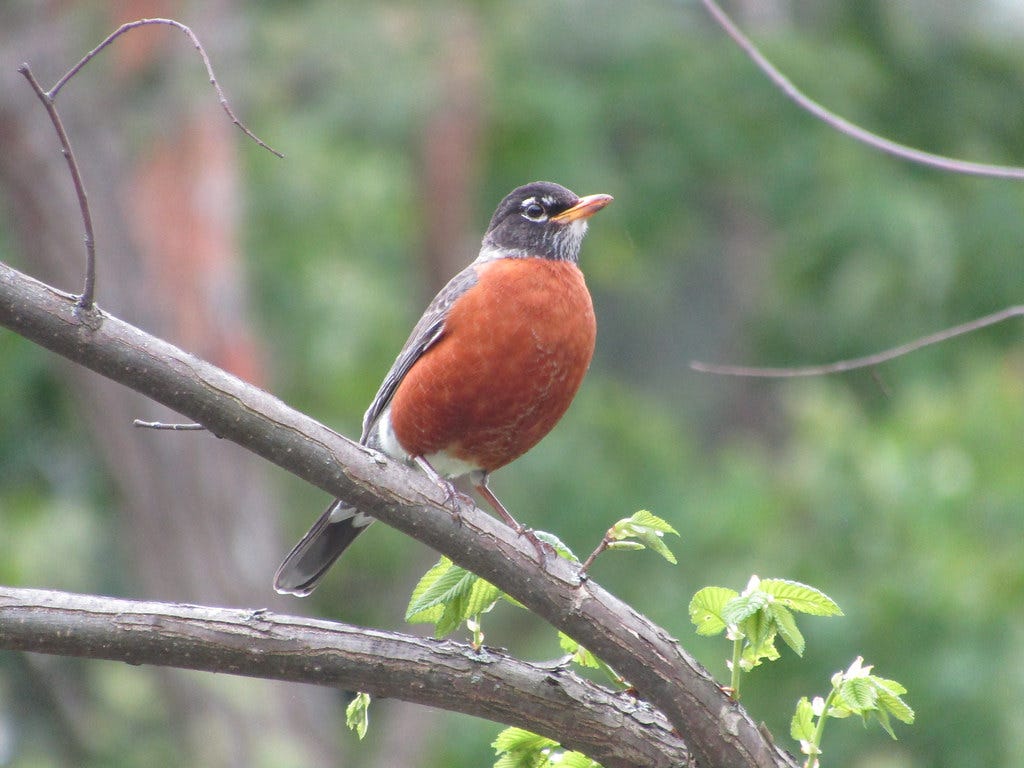
AB: I started at the Farm Hub in 2015, and because it was a private commercial farm for many generations, there wasn’t a lot of access for birders. So, for example, for the Christmas Bird Count, there’d be some species lists from along the road here. But there wasn’t historic bird data about the interior parts of the farm, and there certainly wasn’t habitat use data. And there’s a lot of focus on breeding habitat in the world of bird conservation, but there’s also, overwintering habitat and migratory habitat. And so I was really looking to contribute to the — Oh, my gosh, I’m so distracted by these robins that are surrounding us right now. I’d love to watch a robin for an hour now. We’re surrounded. (laughs)
But, yes, I wanted to contribute to the body of work around our regional understanding of bird habitat use on farms specifically. There are six bird survey routes throughout the farm. So, with the help of two volunteers, Bob Miller and Dixon Onderdonk, we survey those every month, year-round and we record the species that we see, the number and what habitat they’re in.
There’s quite a few things that you could use these data for. I did have one idea recently that I haven’t shared with anyone, but I thought, well, why don’t I just share it on the radio? Now that I have data going back to 2016, I was thinking of making an open-source data browser potentially called the Agricultural Avian Habitat Use Explorer where anyone could access habitat use information of birds on farms.
For example, we have a semi-perennial grain here called Kernza® that we’re trialing for the Land Institute. There’s not really a lot of data on bird use of Kernza, but it’s interesting because it’s harvested late and the Bobolinks here like to nest in it. So it’s potentially compatible as a bird friendly crop. Now, I have a number of years of basically a species list of who and when and how often the Kernza gets used by birds.
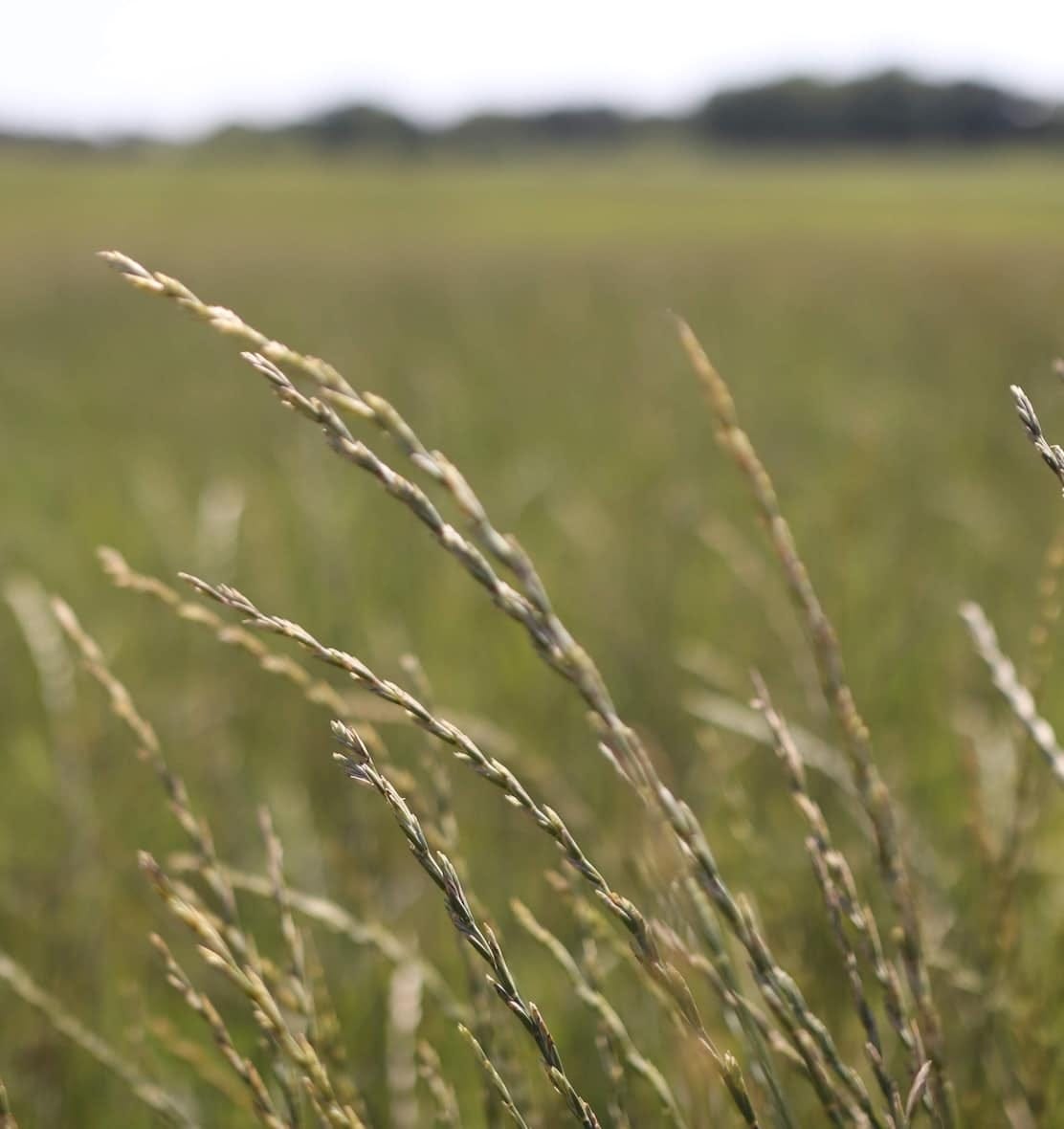
For Noah Perlut’s project that I mentioned before, studying Bobolinks, we have tracking devices on those birds so we can see when they go, where they go. But sometimes it’s hard when you’re only looking at the bird’s position on a map to tell what specific habitat they’re using. And it’s often agricultural areas, which is interesting. So I thought, wouldn’t it be cool for people doing habitat use work for birds if you really could know what habitats were in that geographic area and what birds were using them and when.
There are several other reasons why those data could be useful, but that’s kind of the direction I’m hoping to go, making it open-source, publicly available and then also use that information to potentially create this kind of a farmer bird guide that’s sort of like, here’s the quick easy ways that farmers can incorporate birds into their operations with those data being a platform to understand what birds are using which habitats, and when.
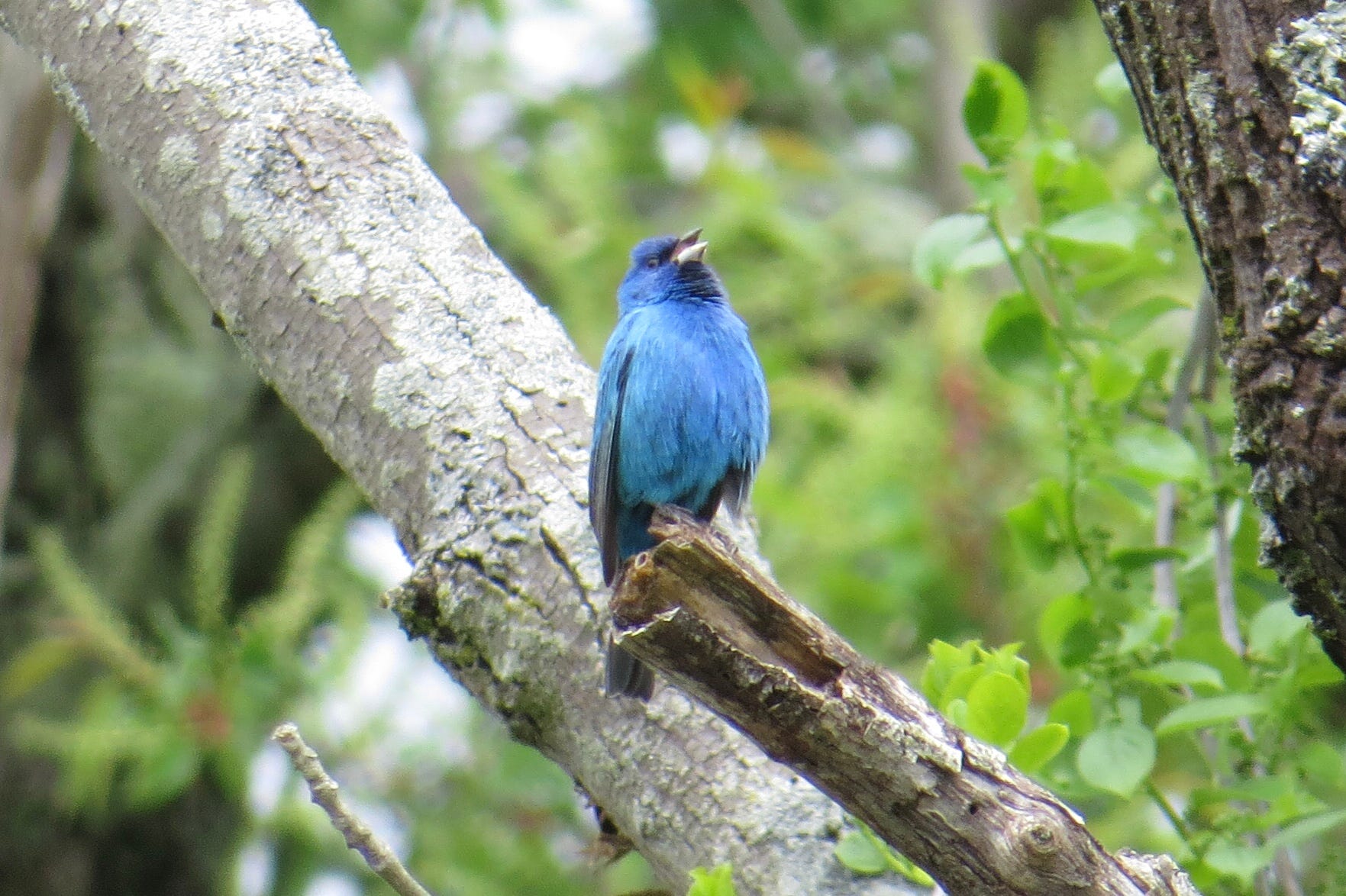
For example, at the Farm Hub later in the summer, we start to see a massive influx of Indigo Buntings in our grain corn. I don’t think when you’re seeing an Indigo Bunting at a field edge or a forest opening during the breeding season, you’re necessarily in your mind imagining that it’s going to go to someone’s grain corn field. But that is the case here. We see so many Indigo Buntings in our grain crops here at the farm. So, yeah, there’s a lot of really interesting info on birds and their use of on-farm habitats, whether it’s during migration or the nesting season or the winter.
MF: I was looking at the “What Can I Do?” list on the Farm Hub’s website. I really like “Make observations at home about the creatures you see in your backyard.” Could you elaborate on the idea behind that suggestion?
AB: Yeah, I like that you put focus on the “What Can I Do?” List. We put that together for an event once, and people have really grabbed onto it. And I think it just speaks to how people are hungry to take action, to figure out how they can help.
And so, yeah, that particular recommendation to just spend time observing birds, I mean, there’s a couple things there. One, it’s just fun to spend time with and observe things in your backyard. Secondly, I think it’s really important that people build empathy and understanding for some of these creatures or beings that are in decline, oftentimes at the hands of human activity.
So the more you can kind of put yourself in the… I would say shoes, let’s just say shoes (laughs), the shoes of a bird or any other creature, the more you can understand them and build empathy for them. And I think the field of wildlife biology is moving in this direction where we realize that there’s a sociology and a human component to how we look at wildlife.
And you can’t separate the human component from the wildlife component. They’re very interconnected. So it’s definitely more of a philosophical art or maybe like, a qualitative way of thinking about wildlife conservation. But I do think that, you know, even if you just throw some crumbs in your backyard and you watch ants for an hour because the ants come and take your breadcrumbs away, it helps form those relationships. Building empathy for creatures like ants that you might not normally pay much attention to is a really important relationship to have. You know, for some people it’s ants. For some people it’s birds. What Peter Schoenberger said in the last show you did really resonated with me where he was kind of like, “I didn’t really have a choice. I just had this experience with birds and it gripped me. And I’ve been looking at them ever since.” You never know when for someone it’s going to be that moment. And so, yeah, taking the time to spend time with ants or birds or whatever it might be. It shouldn’t be underestimated. I think it’s really important.
MF: Yeah. Well, that was the last question. I stopped asking people what their local favorite birds are. I have been asking the question and, Peter, you heard Peter saying, this is, like, an impossible question.
AB: I do actually have a favorite bird.
MF: Oh, tell us about it!
AB: Growing up in New York State and spending a lot of time in the north country, I have to say, hands down, my favorite bird is a Common Loon. Their coloration and just hearing a Common Loon over a still mountain pond in the evening, I think is just one of the best things in the world. So, yeah, I have a definitive favorite bird. (laughs)
MF: So maybe I’ll bring back this question. (laughs) Thank you so much.
Related Articles
To learn more about the American Kestrel in our area:
Interview with Ben Nickley (Berkshire Bird Observatory): A Huge Collaborative Effort to Help the Local American Kestrel Population

Beakuency welcomes Ben Nickley, the executive director of Berkshire Bird Observatory, a bird conservation nonprofit in Egremont, MA. In this interview, we hear about BBO’s Kestrel Nest Box Project which provides nest sites to American Kestrels, the smallest falcons in North America whose population is in steep decline. The project spans southern Berkshire County and bordering counties in New York State, and Ben shares how the collaboration with farmers, local non-profits, town and state governments not only bolsters kestrel populations in our region, but also helps the community build relationships with one another.
To learn more about Bobolink in our area:
Interview with Heidi Bock (Columbia Land Conservancy): Fostering a Compassionate Community for Wildlife and People

In this interview, we explore the topic of off-leash dogs in nature areas and look for ways to approach the issue through a conversation that fosters a sense of community instead of confrontation. To discuss this, Beakuency welcomes Heidi Bock, Vice President of Conservation for the Columbia Land Conservancy, a nonprofit land trust that works with the community to conserve farmland, forests, and wildlife habitat in Columbia County.


