


Beakuency welcomes Peter Galgani, a wildlife photographer and staff member at the Columbia Land Conservancy. Peter discusses his bond with nature in the Hudson Valley that he cultivated through art and conservation work. Central to his work is patience and finding joy in each small step, along with his passion for capturing contexts that serve an important archival purpose for future generations, something AI-generated wildlife imagery cannot provide. His stories encourage others to foster connection, not just to wildlife, but to fellow people who share stewardship of local outdoor spaces, which could be one antidote to the mental health crisis we are going through here in the U.S.
Peter’s wildlife photography onlybirdz.com
This interview was recorded on July 8th, 2026, and originally broadcast on Wave Farm’s WGXC 90.7FM on July 25, 2026. It has been edited for length and clarity.
Interview Transcript
Mayuko Fujino: Could you introduce yourself?
Peter Galgani: Sure. My name is Peter Galgani. I’ve been living in Columbia county for about five and a half years now. I work for the Columbia Land Conservancy and I’m a recent graduate of Columbia-Greene Community College with an environmental biology degree.
MF: You’re also from the Hudson Valley.
PG: Yeah. I was born down towards the south part of the Hudson river in Peekskill and spent my childhood down there, playing in the woods with my friends and stuff. And then as I got older, falling into suburban life and the disconnect from nature a little bit.
MF: You said Long Island, right?
PG: Yeah, yeah. I moved to Long Island when I was a teenager and lived there until my late 20s. I was actually just looking at, I was going to show my partner where I lived on Google Maps, and it was so depressing. When you look at the satellite image, it’s just rows upon rows upon rows of houses and there’s not a lot of green space.
And when I reflect on thinking about sort of this ebb and flow of being interested in nature, that was definitely the low point because there really wasn’t much to see. Long Island is beautiful and there are places, but where I grew up or when I spent my time there, it was very much like just houses, very manicured everything. Not a lot of green space.
MF: Also, growing up in a place like that doesn’t train you to see things, even if things were there. I grew up in the suburbs myself and there must have been cool birds there. We know for sure there are cool birds on Long Island. But if you are not raised to see the biodiversity that’s there, then you’re just not going to see it. And so I think that sort of relates to the next question I wanted to ask you, but first of all, you’re a photographer too.
PG: Yeah. Oh, yeah, I should have said that. Yes. An amateur photographer.
MF: With a professional quality.
PG: With professional gear. [laughs] But, yeah, I’ve been doing photography for a while. I started playing around with film cameras when I was a kid. And then when I moved to Columbia county, I got involved with digital work. Then, it really kind of opened the door for wildlife photography.
MF: So the photography’s been always with you, but wildlife came later.
PG: It’s funny you say that, because for me, when I was a young, like a kid, my grandfather — I spent a lot of time with him — and I have this really core memory of, on the weekends I would be with my grandparents and he and I on Friday nights would watch the Discovery Channel.
And it’s funny now to think of the Discovery Channel, it’s really changed programming-wise. But back then, this was going back like, I don’t know, like 30 years. It was nature documentaries. We would sit together and watch them. And I found myself really fascinated with not only what was being displayed, but also, I remember thinking about the people doing it, picturing somebody sitting behind a camera in a tree filming what was going on. And my grandfather had all these cameras, and so he would let me play with his stuff. So I always had that affinity for that.
But I do think, kind of what we were saying before about moving to the suburbs, the dip in my interest in nature, it went away. And it was there, you’re right. There were things happening around me, but I just feel like it was muted. And then got back into film photography. And when I moved to Columbia county, I was able to buy some digital stuff and really kind of reminded myself of, like, oh, you always wanted to do this.
I came from Brooklyn in 2021 post Covid. Really cooped up in a small space. And when I moved here, I found the Columbia Land Conservancy parks because there was one right by where I lived, Greenport Conservation Area. I remember going there and just thinking, like, wait, this is free? I could just walk around here? Especially coming from where I just was, all that space, I think it changed my life in a really positive way and really helped me reopen that door of connecting with nature. And then I just, like, slid into this. I had a camera, and thought to myself, like, oh, I could actually document these things, because I love documenting everything.
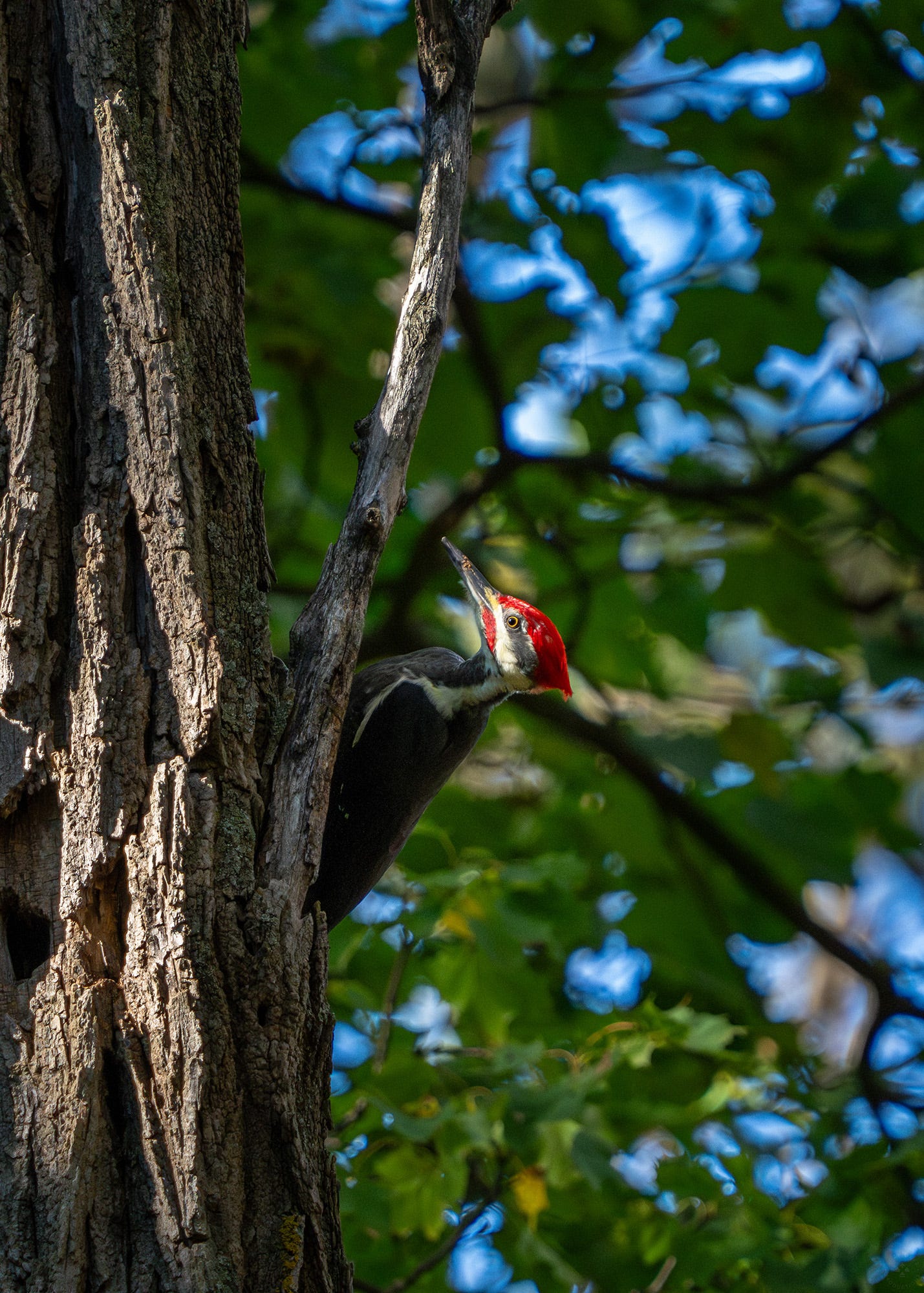
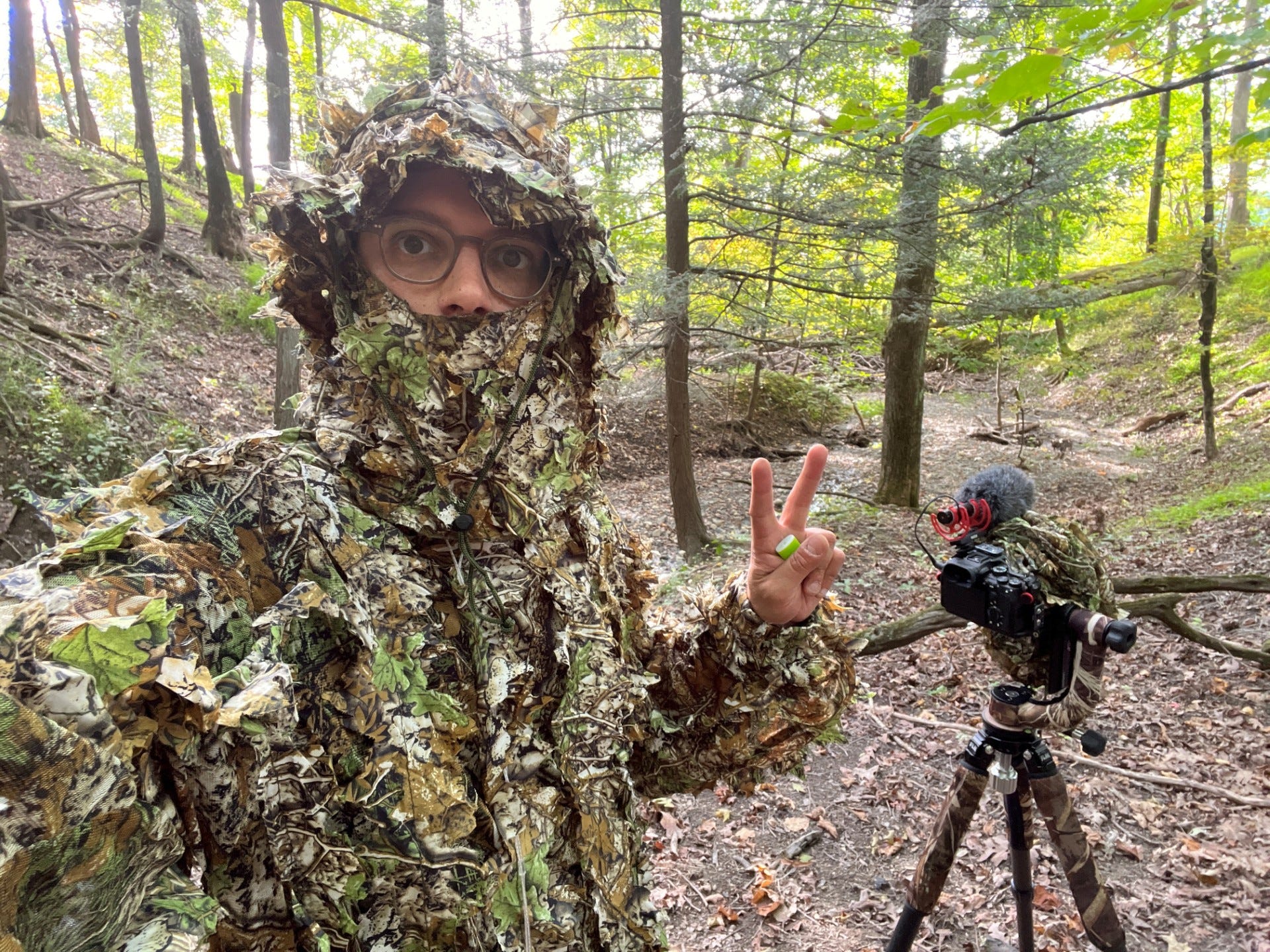
MF: I was looking at photos and videos on your website, and I think one of my favorites is the Pileated Woodpecker with the sun hitting its red head. Just, in such a dramatic way. But for somebody to capture that, not only the bird, but also to capture such right moments. I mean, that’s not a shot you can just get. You wait and wait. There was one video that you posted on, I think that was on YouTube, documenting yourself, taking hours. You have all the camouflage. And it looked very cold too.
PG: Yeah. That was in February. I was filming a beaver lodge down at Greenport Conservation Area. There’s, like, a bay that’s connected to the Hudson river. And I happened to notice some beavers down there one day when I was hiking.
MF: Right. So your condition is not always comfortable. Like, right now, we’re sitting in the gazebo of the Ooms, and it feels wonderful to be here. But it’s not always like this. And so my question was that, you still find joy in this kind of excruciating process. How can you exercise that professional grade patience waiting for things to happen? Have you always been this way since you were a kid?
PG: Yeah, I think, as a kid, and throughout my whole life, I’ve been like I could focus on something. I don’t know where that comes from, but I’ve been able to kind of focus that energy towards the things that really resonate with me. And so when I moved up here and realized there was so much going on there, at first – and I don’t know if you had this experience with birding for you, but – I was a late sleeper. I would like to sleep in, and I would take all my gear and go out in the middle of the afternoon, carrying all this stuff around and getting nothing, you know, not seeing anything and getting kind of, like, discouraged and frustrated. And then realizing, oh, you know, I need to cater to what’s around me. And suddenly, getting up before sunrise and things like that.
I think the reward was worth it because I wanted to see all of this cool wildlife, literally my backyard. And it felt like the only way to do that. There was this compromise of, well, I can’t do it on my terms. I need to do it on nature’s terms. And to your point, you do end up waiting around a lot, but I guess I’ve always enjoyed that sort of peace and quiet.
To the video you’re referencing, I was wearing, like, a camouflage suit. I’d never really played around with that too much, but the thing I started picking up on is, animals are aware when you’re around. And they act differently, just like we act differently when we are being perceived, when we know someone’s watching us. So my goal suddenly became, I just kind of want to sink back into the forest and just see what things are up to. The only way to do that is to be patient and stay still. I think I was able to point that focus towards that idea of, there is a reward at the end of this.
Some days, maybe it isn’t, and maybe it’s not an instant reward. Because there were days where I would carry my stuff around and sit down and nothing, you know. But even in that, I would remind myself where I was, and I was in these beautiful spaces. And, you know, thinking back to being cooped up in an apartment, not being allowed outside, like curfews and lockdowns, and just kind of, being grateful for that in spite of the cold.
MF: I wanted to ask you this question about patience because it sort of fascinates me. I used to teach at after school programs, working with kids and how to make art and stuff.
PG: Amazing. Which you need patience for.
MF: Right, patience on my end too. [laughs] Kids often don’t have that patience. They’re like, “I’m done!” in like 30 seconds. These people are not realizing there’s a reward in every small step. And that if you can find joy in every small step of the way, one stroke of your pencil, or in your case, just looking at whatever that’s here now, maybe not the beaver that you were looking for, but in your video you found Kingfisher.
PG: Yeah. That was a beautiful moment.


MF: If you are attentive to the little joy that you’re being given, you may not achieve that goal of your day every single time, but you do receive something. And so it’s not so much the patience, actually, but more about how much you can enjoy every small step of the way to achieving, finally, the beaver. Or whatever you were looking for.
PG: I’m thinking about what you’re saying, and I think you’re right. It is those little rewards that are actually the motivators. I say this about most creative things, I feel like I always move my goalposts. When I start out I’m like, this is what I want to do and I’m going to do this thing. And by the time I finish it, I’m already kind of moving that to the next thing. Not necessarily always celebrating like, wow, you just learned how to do something. I think slowing that down and celebrating those kinds of smaller victories or moments, that’s good fuel for the tank, you know, that keeps the engine running in a healthy way.
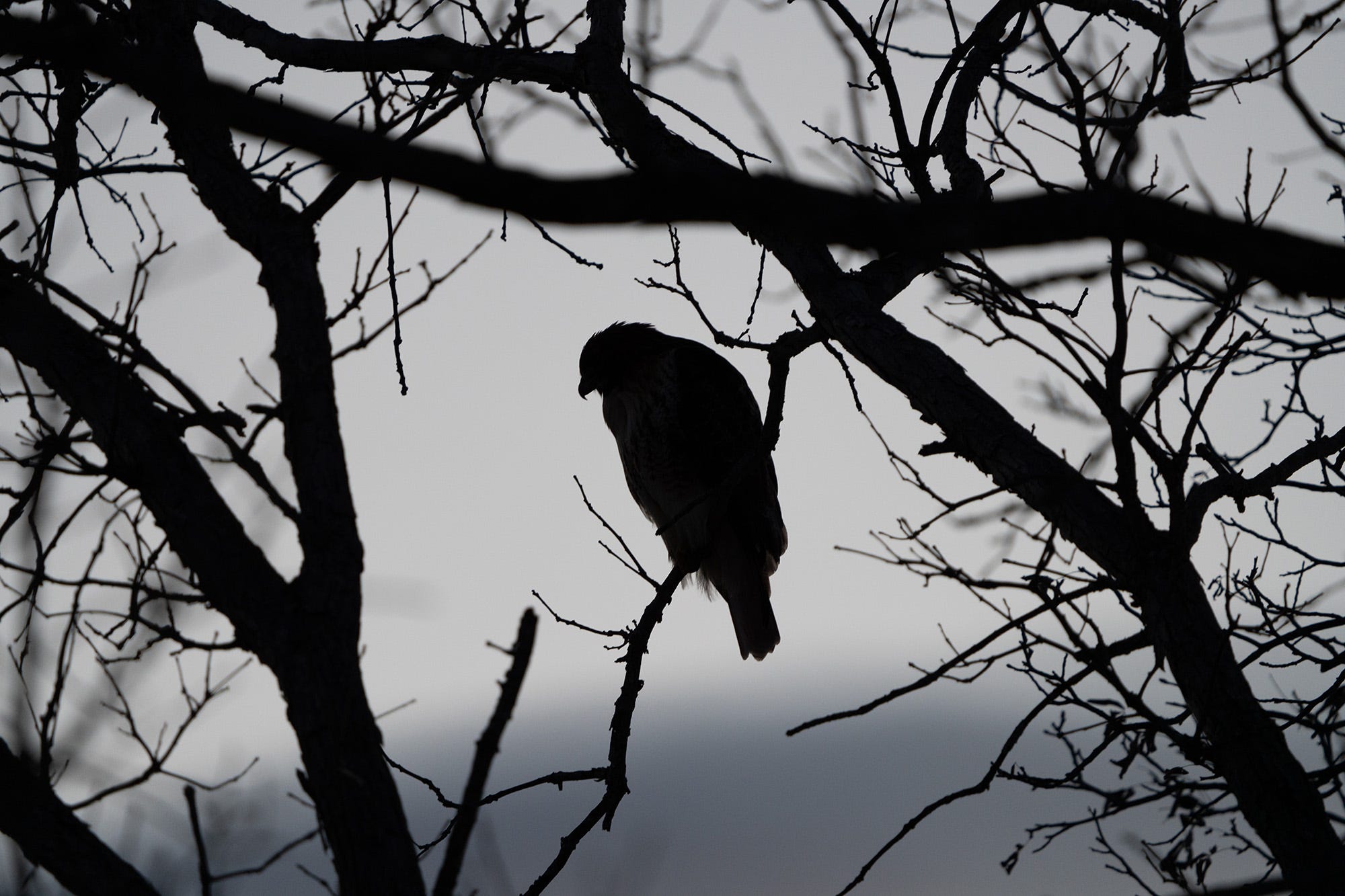
What I say to myself is, try to get one good photo, just one. And anything after that is awesome. There’s times I’ve gone out with bad lighting, you know, or suddenly, like the day changes and it’s really hard to get a good photo. In those moments, I used to get frustrated and then I would feel that sort of drag coming on. And I decided you have choices in life and I know they’re not always easy to make or as easy to see. There’s a photo I think of right now and it’s like the silhouette of a Red-tail Hawk. For me, when I take wildlife photography, I love detail. I think it’s cool to share that with people, because you don’t really get to see them up close. Like the woodpecker you were talking about before, like, really seeing the eye and the hair. They’re skittish, they fly away. And I would get frustrated when I couldn’t get those shots. Then I just decided one day to be like, let’s go for an artsy shot, you know? And I got this really cool silhouette of a Red-tailed Hawk behind the Catskill Mountain range. And I just remember thinking, like, this is the positive way to spin this. Instead of going home with nothing and frustrated, I was really proud of this photo I took. And you know that that’s not every time. There are times where you do go home frustrated, but I think it’s part of the process, you know?
MF: Yeah, totally. Would you like to share a story about one of your memorable bird photo shoots in the Hudson Valley?
PG: Yeah. There was this time that I had, like, a day off from work, so it was like, a weekday, and I got to Ramshorn Livingston bird sanctuary in Catskill. I remember it was high tide, and I don’t know if you’ve ever been there, but, part of the path floods. The tide was coming in, so it was kind of low at that point. I was doing my lap, and I noticed a bunch of ducks. I didn’t know what kind of ducks, but in the main little pool area where there’s a bridge. And as I was coming around the corner, it was almost like before they even saw me, they took off and flew away.
MF: That’s where people launch kayaks.
PG: Yes, exactly, that spot. And so it was a little frustrating because I had my camera, I was ready to take some pictures. I did a lap around the property, and as I was coming back, again, it was almost like they had this sixth sense that they knew I was coming. And they took off again. And in that moment, I just had this thought where I was like, you know what? Nobody’s around at this park. It’s flooded. I’m going to put my camo suit on – because normally when I wear that, I don’t want to scare people. It’s kind of intense. You know, you’re walking in this full camo suit. And so I typically do that away from trails. But, you know, the pool that we’re talking about, the trail goes right around it. And so I suited up and I sat pretty much on the shoreline of this little section, full camo suit.
And I just sat there for maybe, like, I want to say like an hour and I just waited. And I remember seeing them start to slowly come around the corner and then fill into the pool. And my heart was racing. Like, I just remember being like, “oh, my God.” And I didn’t know, I did learn afterwards, that they’re Common Mergansers. I didn’t know much about ducks in general, and especially diving ducks. I just remember I was filming them, and I had my video camera, and so I could shoot in very slow motion.
And I just remember watching one dive in and come up with the largest fish, proportionally, that I’d seen with a bird, like, ever, and it just swallowed it. And then I started seeing the males and the females start circling each other. And it just became this, like, really beautiful moment. And it only came from that sort of thing we’re talking about before, of sitting in a space. But, you know, that’s what it took to get that image, and it’s one that I love sharing with people. It’s fun watching somebody watch the video, because most people are like, okay, it’s a duck, and when it first comes out of the water, it just has this gigantic fish in its mouth. And then the next thing everybody says is, like, it’s not gonna swallow that, is it? And through that, I, like, re-live my moment, because I had the same thought where I was just like, I’d never seen something like this, and all I was thinking was, like, capture this. You have to capture this, you know? And so, yeah, it stays with me to this day.
MF: This is the video on YouTube.
PG: Yeah, you might have seen it.
MF: Yeah, I think I saw it, because I had the same reaction.
PG: And, you know, I have a story for every photo and every video I’ve taken. Because to me, what I love about art, any type of art, any medium, I love context. I love knowing, like, what was going on, you know, what were you thinking about?
MF: That’s kind of a good point to talk about in relation to the next question about hyper-realistic AI generated photos and videos of wildlife that are flooding social media these days. Conservationists and conservation organizations are expressing concerns that those images could distort people’s perception of reality. So, as a wildlife photographer, and also somebody who works for the land conservancy, what danger do you see in this? How do you view the important role of nature photographers, human photographers, in times of we’re living right now.
PG: Yeah, that’s a great question and I guess I’ll preface it, especially with AI. It’s become kind of a catch-all for different types of technologies. And I think at least what I’m gathering from the question, and when I hear AI, what I think of is generative AI where people are typing in prompts.
MF: Yeah, that’s a good point to clarify.
PG: Yeah. Because, you know, I use Merlin and Merlin uses AI. And I’m speaking for myself here, I can’t speak for anyone else but like I used to be pretty militant about it and say like, no, this is all bad. And actually this has been in our lives. It’s just sort of the language we’re using around it is this sort of catch-all.
So on the subject of generative AI. I was just talking with some friends over the weekend about this, that they were watching a video where this old woman was feeding a grizzly bear, hand feeding it, clearly AI. People are just kind of scrolling through things and they’re seeing that. Whether they’re actively thinking and imprinting that information in their brain, I think it warps the safety stuff. It definitely makes people think differently about things like raccoons that are very cute animals but can be kind of dangerous if you encounter one during the day, you know, people thinking they could come up. I mean, I can’t tell you how many times you’ve seen real videos of people in Yellowstone park and they’re getting too close to a bison, you know, and the bison attacks. So I think, from a safety standpoint, there’s that aspect where it’s dangerous for people.
I also, just for me personally, it’s disappointing because it takes a lot to capture, especially in the wildlife setting. When I would watch these nature documentaries as a kid, I was always thinking about the person behind the camera too. I was watching what was going on and listening, but then also being like, wow, someone’s been sitting there, right? Ask my grandpa, like, how did they film that? Especially as Planet Earth came out and they were making these behind the scenes things, you could actually like, witness what it took for these folks to capture. Like, I was just watching something with the Snow Leopards and it took them three years. So when I watch it, there’s this appreciation not just for how beautiful and majestic these creatures are and that they exist on this planet with us, but what it took to document it. That value, and not a monetary value, but the value in that footage is just astronomical to me. With generative AI videos, it just kind of cheapens that whole experience. And I think, it makes people think that you could just kind of go out and film stuff.
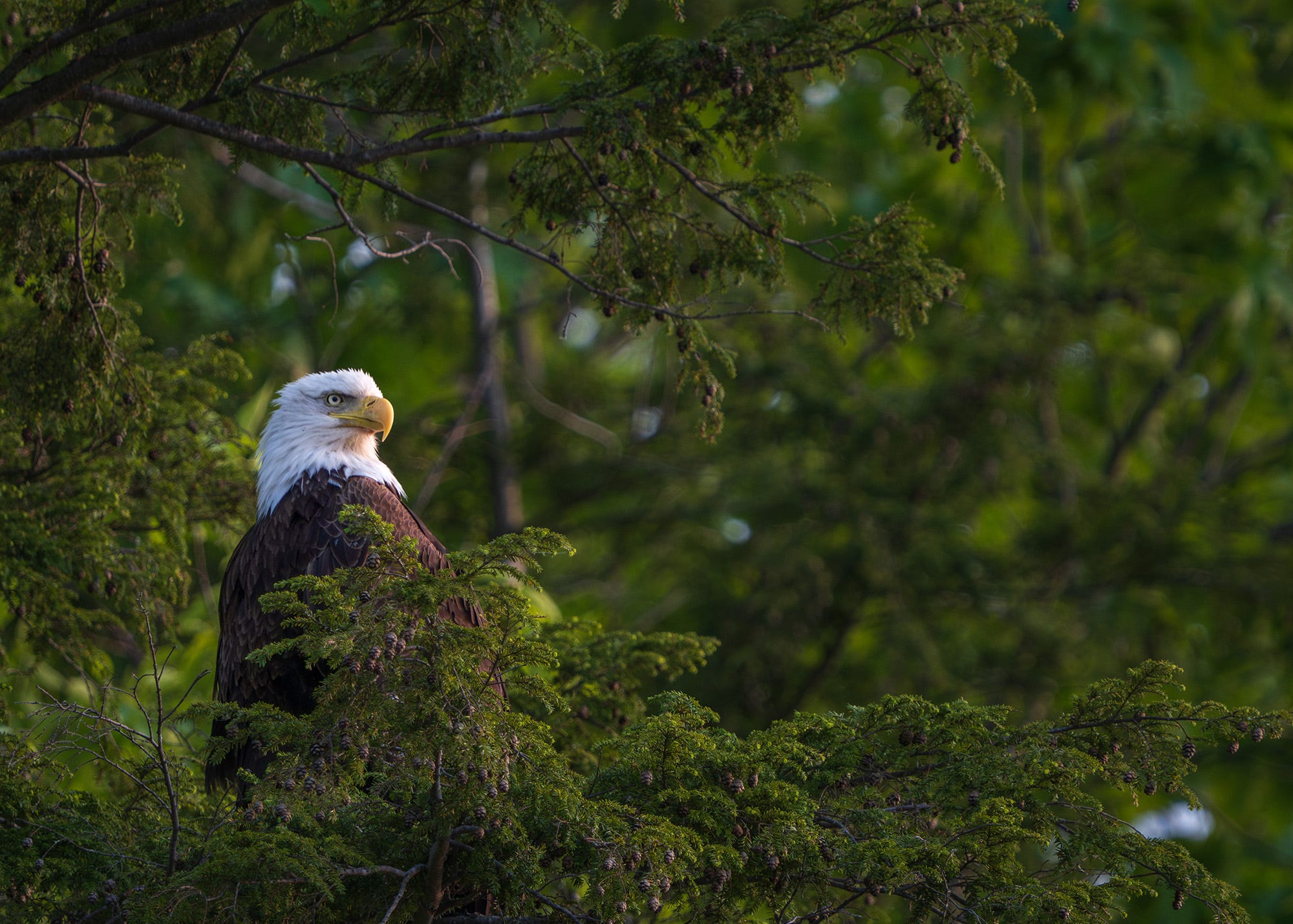
To the second part of your question, though, and that’s the part that I think about a lot. You asked, what’s the importance of nature photography in this world and the way things are developing? I use the Bald Eagle as an example. When I was growing up as a kid, they were going extinct. It was a scary thing to see, maybe not going extinct, but they were endangered. The only one I’d ever seen was in captivity because it was injured. And when I moved back up here in 2021, there’s middle ground flats, which is like a little island outside of Hudson. There’s a Bald Eagle’s nest there. You could just see them flying around right on the river. It was amazing. It made me realize, like, oh, things change, and both positively and negatively. So as I’m taking photos of landscapes of the diverse creatures that live in those landscapes, that’s going to change. I think having a record of that and whether it’s just for my personal self or, you know, I share a lot of my work with other groups and the Columbia Land Conservancy. So these are being archived, and maybe nothing’s used for them forever, but I like the idea of knowing that, this is what was living here while I was here, and this is what the landscape looked like.
Greenport had a little bit of a landslide a few years ago, and actually it cut off my access to the Beaver Lodge. So I wasn’t able to get back down there anymore because of this landslide. I’m grateful I was able to document that, because I couldn’t get back down there. And so I think in general, documenting everything, I love that. I think seeing progress in areas or projects is really important and preserving that goes a long way. I mean, when we look at Columbia county, I don’t know if you’ve ever seen it, but there’s like this aerial photograph from 1940. You could see Columbia county and what it looked like, but prior to that, there’s not much, you know, you can’t really find as much stuff. And I just think, maybe 50 years from now, people are going to want to know what this area looked like. So it’s nice to know that I’m adding to that sort of archive of information.
The Columbia Land Conservancy, we have these active projects going on at some of our public lands. I’ve insisted on taking extra photos, just because I think it’s kind of neat to see — especially with nature, things don’t just happen immediately. And so being able to kind of look at something and say, wow, this is what this used to look like, especially with invasive plant removal. It’s interesting to see the progress of a project. It’s cool to be able to look back and say, like, well, look at this beautiful space, this is actually what it was before. I think that gives me more of a reverence for the space, an appreciation for the hard work that goes into that. And that it’s not just, you know, you snap your finger and everything changes. Which, AI, or generative AI, that’s kind of what it is. You know, you kind of snap your finger, you say, make this image, and it can. And it might fool you, but to me, that context, all of those things are what makes it worth looking at. I don’t want to waste my time looking at something that nobody put effort into. Every person is going to be different on that, but that’s where I kind of land with that.
MF: Right. The real important mission here is not to capture this one beautiful picture that you can frame and hang on the wall, but to capture the moment in the flow of everything, in the context of everything. It’s beyond that one wonderful image. Though you do have wonderful images.
PG: Thank you.
MF: It occurred to me that, you know, there’s a loneliness epidemic in the United States of America, they say. It feels like it’s encouraging for a local resident to know that there’s somebody like you out there doing this kind of work, and you’re not alone. There are some other people who are working, caring about what I care about in the place that I live, and that things are happening outside your little world, your limited perception of the world. I can’t make the direct connection between loneliness and acknowledging the world out there. But you don’t exist in a vacuum. There’s a whole world out there. There’s people doing things.
PG: It’s what being human is to me. I think, especially, like, what I was saying before about moving up here. It was pretty isolating during Covid, especially in the Manhattan, Brooklyn area. When I came up here, it was kind of like, oh, this is all still going on around without me. And I said this earlier about, you know, when I first started trying to do wildlife photography. I just went out when I wanted to go out. And had to kind of take a step back and be like, yeah, like what you were saying, they’re not coming out for me. I have to kind of cater myself to them.
I think 90% of my photos are at Greenport Conservation Area, just because it’s so close and it’s almost 700 acres. It’s on the Hudson river, and it’s pretty diverse. I’ve taken not just birds, but all different types of wildlife. This is all around you. I’m not going anywhere special. And sure, some of the photos, I had to sit for a really long time, but a lot of them, I’m just on my walk and just kind of observing and keeping my eyes open and being open and receptive to what’s around me. And also curious and saying, like, “what is that sound?” “What’s making that?”, and actually following it. Sometimes, you know, especially with social media and prior to the generative AI stuff, you see these beautiful places that people are going to and these exotic things. But there’s a lot of really beautiful things, especially insects and the birds that we get around here. I just think it would be cool if people can pick that up and realize that they don’t have to go far to see a lot of beautiful and diverse nature.
MF: Right, you’re more connected, and connection is the opposite of loneliness.
PG: Yes, that’s a great point. And even if you’re by yourself, I don’t feel alone in those moments. And also it’s nice when I’m out in the morning and I see other people out there walking around, and I get the impression that they also understand that importance and that they’re also connected with it.
MF: Well, speaking of connections, and people out there doing cool work in the field. You also work at the Columbia Land Conservancy. Would you like to tell us what you do when you work there?
PG: Like I said, when I moved here, I discovered the Columbia Land Conservancy and I just thought it was this really cool space and I couldn’t believe that they made it available to the public. And so I started doing some independent trail maintenance. And then I started getting involved in volunteer work with them because it just, I wanted to be able to share and help keep the space that really helped me come out of this bad space, you know, for myself. I want that to be for other people too, and I want to assist in that.
I was working at a tech job and I would see the Columbia Land Conservancy post a job and I was like, oh, I want to work there. I was kind of afraid to step away from where I was. But I think I just hit this point where I really wanted to be involved with something that was serving nature and connecting people to that nature. And so I left my job, went to school, and my goal the whole time was like, I want to get a job at the Columbia Land Conservancy, which is maybe like a little bit of a pipe dream. But I knew that’s what I wanted to do. They had an internship last year that I signed up for, and went through the interview process. It was interesting to be a 39 year old intern, you know, in a brand new field where like, prior to that I knew everything in my job and I was like this expert. And suddenly, I didn’t know anything. It was a really cool, validating moment to be able to go inside the organization and be like, yes, these are cool people all interested in the same idea and I get to work with them.
I spent my summer doing an internship with them, working on the stewardship team and the public lands team and then became a full time worker in November of last year. I split my time between public lands — we have 11 properties now — and I help maintain them when we work on special projects. I also work on the stewardship team where we have private land easements in Columbia county. I really didn’t know much about that aspect of the Columbia Land Conservancy. I thought it was about these public lands because that’s kind of where my head was. I learned quickly that the reason why Columbia county is staying beautiful is because of how many conservation easements we have on private land with landowners. Those folks are keeping and improving the environment and stopping more development. Which it can go in either direction, especially with housing and things like that, but even that, if you go to Columbia Land Conservancy’s website, you could see that we’re starting to get involved with working on helping with affordable housing in this sphere of environmental and ecological protection as well.
And so, yeah, it’s a really beautiful place, and I love the people I work with and their enthusiasm for the outdoors. And, you know, I think in my head, you have an image of what it’s going to be like to work outside. And then there’s the reality of working outside in the summer. But I find, and especially on the public land side, this instant gratification where you clear out a trail and suddenly it’s this messy space and you’re making it accessible again for other people to enjoy. I don’t know, there’s not many other things that I feel as rewarding as that feeling.
One thing I will say that I found very helpful for me, and this is before I started working there, but doing independent volunteer work and trail maintenance for me was this really beautiful marrying of physical work and mental work. I was going through a tough time in my life. And I remember just walking Greenport, knowing the trails and seeing trees that blew down. I remember asking the Land Conservancy, like, can I clear this? And they were just like, yes, please. You know, because they have limited staff.
And I found myself not only getting a good workout from this, but making these mental connections, clearing out these spaces. You know, you see this big mess on the trail, and it’s kind of overwhelming. And I feel like life can be like that. You have this overwhelming feeling, and as you start chiseling away, you find a vine that’s running through everything, and if we pull that vine out, suddenly, everything starts to clear up. I just found myself making these connections of being like, this is life. That’s how you clear up a messy thing in your life. It’s scary and intimidating, but you can find the thread that you could pull apart, and then it suddenly opens up. And that was a very rewarding experience. And really, I found my connection to the land and pride in the land. I know that’s not necessarily bird-centric, but I do think that it’s a really wonderful way to connect with spaces and also give back and make it accessible for other people.
MF: I think it’s related to birding because that’s how birders get to enjoy walking on the trails and watching birds on the properties. So thanks to all of your work.
PG: Yeah. I guess I should disclaimer, don’t just go out cutting down anything you see. You know, I think it’s worth checking in first.
MF: But people can report you. Do you want people to report you or would it be annoying? Like, “there’s a tree down on the trail”, and “Oh yeah, yeah, 100 people told us already this morning.”? [laughs]
PG: No, and I’m actually trying to work on a system that would empower folks because I think sometimes, especially with volunteer work, not everybody has the same schedule to come to our scheduled events. But they have time and they want to give that time. Or maybe they’re not as physically able to be sawing on trees and like ripping stuff up, but they walk the trails and they could let us know, like, hey, there’s this downed tree. So we do have an email you could reach out to us at. But I’m working on a system for us, where we could have a group of volunteers that would just walk and take a photo and it’ll let us know exactly where it is. So that’s something down the line. But, yeah, checking in with us is always a good thing.
MF: Okay.
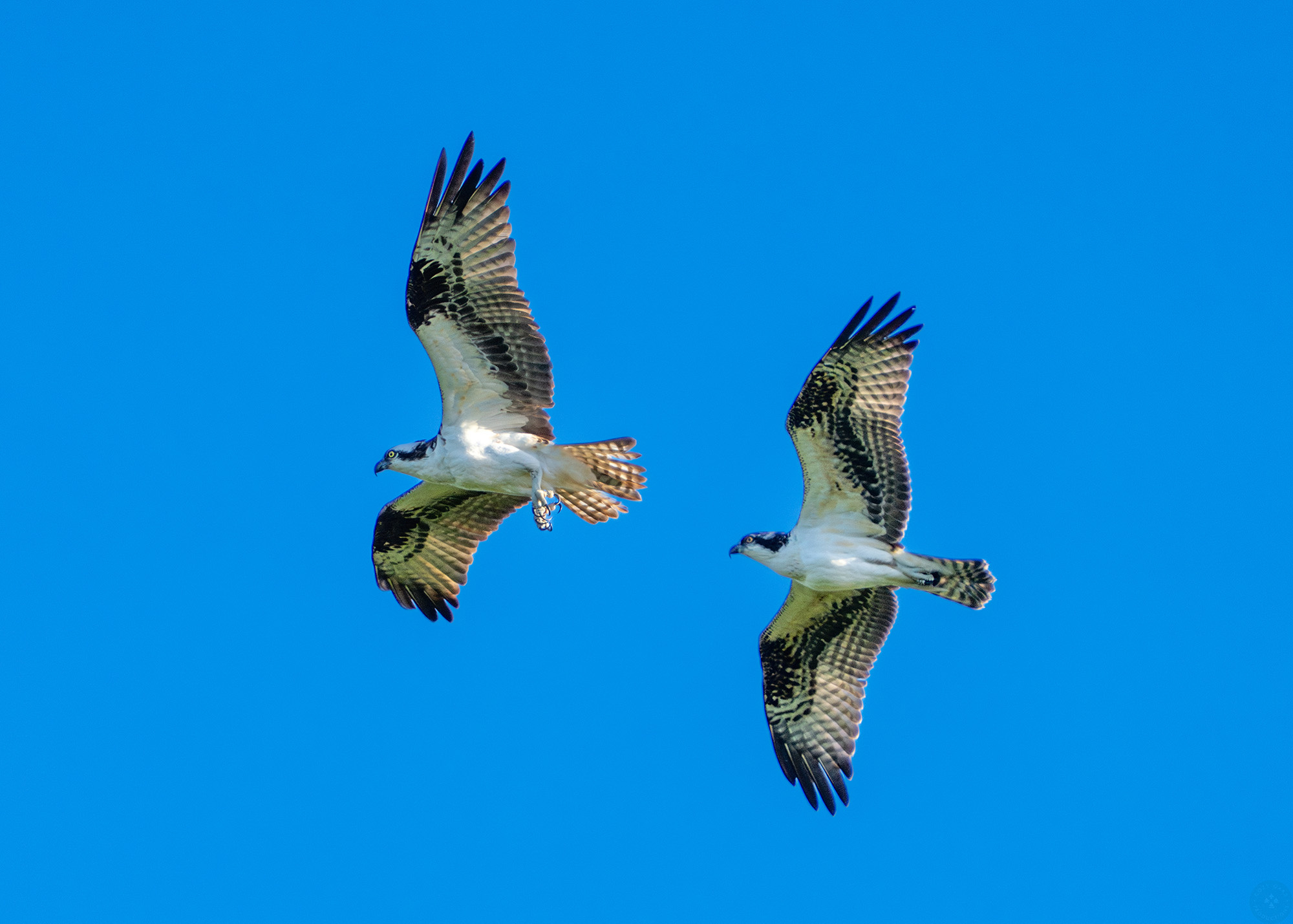
PG: And, yeah, I don’t think I’ve ever heard anybody internally moan when someone’s like, you know, “there’s a downed tree over here.” We want people to access the land. That’s our goal. And I’ve had to scramble through trees with all my gear, which you saw me have on earlier. You know, it’s tough and discouraging. We don’t want that. There’s a power in having access. And I think that my favorite part about the land conservancy is giving that access to people and seeing the beauty around them. You don’t have to travel super far. There’s places all over the county to see all sorts of cool birds. Especially here (Ooms), Bobolinks here. The Ospreys we were talking about earlier, seeing an osprey pull a fish out of the water is a pretty breathtaking sight, you know, and, like, sure, I guess you could see an AI generated video of that. But standing on the lake edge and seeing that happen is pretty cool.
MF: Where can people find your photos and videos?
PG: The Columbia Land Conservancy definitely shares a lot of my photography on their social media and the website. I have a website called onlybirdz.com, but with a Z instead of an S. That’s where most of my wildlife photography goes. There’s actually a link there, I believe, to my YouTube channel. That’s where I’ll post a lot of wildlife photography.
I also went through this phase, and I think I want to come back to it where I will set my camera up and film, like, a meadow for a half hour, or an hour. I think it’s really nice to put that on in the background sometimes. You watch the light slowly change. I was grateful for people who did that, during COVID there were lots of videos like that. I would watch those because I was just so sad inside, you know? And so, I thought it would be a nice way to give back to that as well, maybe you’ll find my video and it’ll bring you a little bit of peace and respite from a noisy world. But, yeah, those are primarily where my stuff is. And, yeah, I just hope that folks can appreciate what’s around them, recognize that you don’t have to travel far to see beautiful — not just birds, but nature, and just got to stop and look around and you’d be surprised.
MF: Do you want to also give the URL of the Columbia Land Conservancy?
PG: Yeah, that’s columbialand.org, and on there, we have all sorts of great stuff. We have a list of events. We have this new feature I really love, where we’ll have photos from past events and talk about what we accomplished. So if you do want to get an idea of what we’ve been doing, or if you want to go to a volunteer event and you’re just not necessarily sure what it looks like, you could see some of those.
There’s maps and directions to all of our 11 public lands as well there. So, yeah, I think columbialand.org is a great place to go, and we have great resources on there for folks that want to just get more involved. And whether that’s independently or with a group of people, I’ve loved seeing you at some of our events. I’ve run into you a few times at our events. Volunteer work is one side, but we do nature walks, we do bird walks. We get really cool guests to come, like Tom Wessels recently, I don’t know if you were able to go for any of his walks. He did them at the Taghkanic Community Forest. We had Doug Tallamy from back in the fall come and speak, and that was a really inspiring thing. So, yeah, we have all sorts of stuff going on, especially in the summer. There’s lots of good programming. So I definitely recommend folks to come check us out. And if you see me out in the world, say hello. And if I’m in the camo suit and you see me, find me.
MF: Thank you very much.
Bird-inspired Music of the Month
Related Posts
Interview with Betsy Albert, Pat Knapp, and Tim Kennelty (The Taghkanic Community Forest): Rooting Community

Beakuency welcomes Betsy Albert, Pat Knapp, and Tim Kennelty, who are members of the Taghkanic Community Forest Committee. The Taghkanic Community Forest is the latest addition to the Columbia Land Conservancy’s properties in Columbia County, and yet another wonderful place for local birders to explore.
Interview with Heidi Bock (Columbia Land Conservancy): Fostering a Compassionate Community for Wildlife and People

In this interview, we explore the topic of off-leash dogs in nature areas and look for ways to approach the issue through a conversation that fosters a sense of community instead of confrontation. To discuss this, Beakuency welcomes Heidi Bock, Vice President of Conservation for the Columbia Land Conservancy, a nonprofit land trust that works with the community to conserve farmland, forests, and wildlife habitat in Columbia County.


