

Ecological Displacement as a Link between Two Worlds
The invasive plants pigment project continues: the gentler side of plants often viewed as "enemy aliens" in North America.


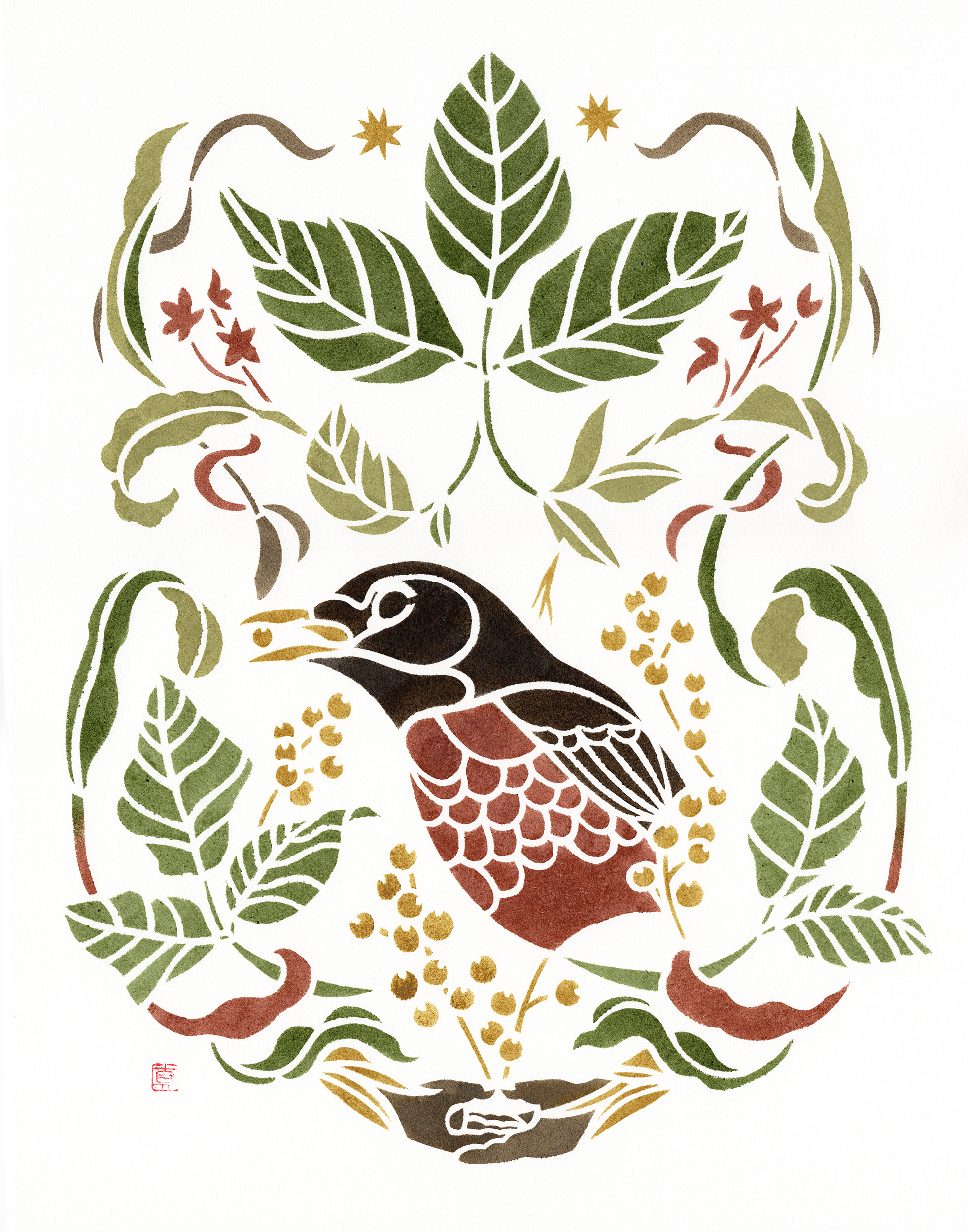
This piece above was stencil printed with pigments from Oriental Bittersweet branches (pink) and berries (light orange), Common Buckthorn berries (green), and roots of Toringo Crab Apple (light yellow). It’s a batch that came out pale, so I decided to paint them on a dark background and see what happens. It turned out to be tricky. When I painted, the pigments became invisible for a few minutes. Then some parts began to show their brightness, while others remained invisible. I was completely puzzled by this, tried it on a couple more pieces of paper, and they kept behaving oddly. In the end, I thought this experiment was a failure. (I should have taken a picture then.)
The next morning, I saw that all the colors had come out as shown above.
This whole experience resembles what people encounter when they are tricked by foxes in Japanese folktales, so I titled this piece Bewitched by Foxes.
For this project, I’ve been digging into contemporary and historical documents about these Asian plants. While they often cause serious ecological damage here in the U.S., they have been beneficial to people in their homeland. I thought it would be interesting to use this project to highlight the gentler side of these plants. I’m collecting information from books and the online archive of the National Diet Library of Japan, which is a pretty fun rabbit hole.
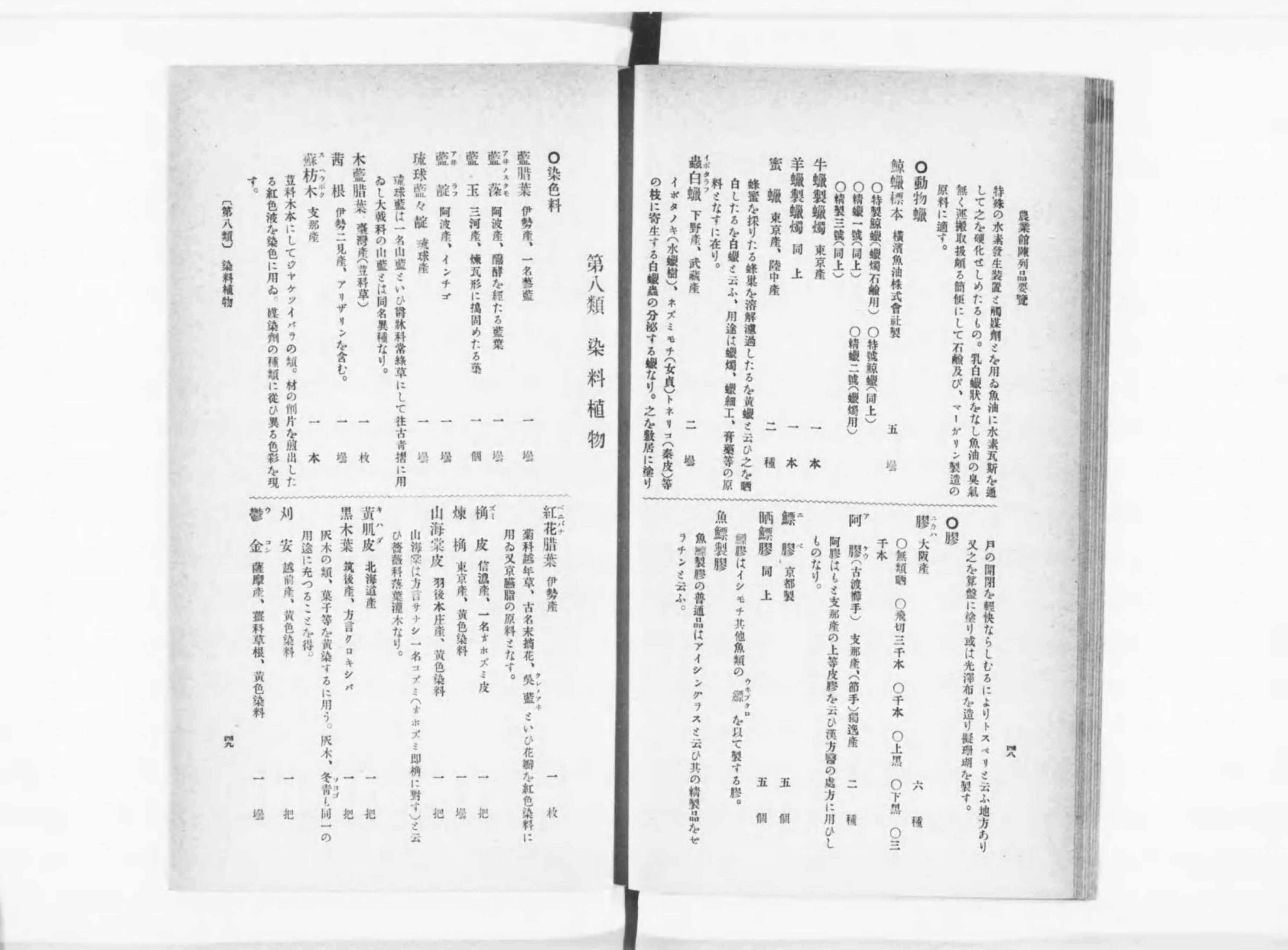
For example, the image above is from an exhibition catalog put together by 神宮徴古館農業館 the Jingu Agricultural Museum, Japan’s first industrial museum established in 1891 to promote the divine virtues of 天照大神 Amaterasu Ōmikami (the sun goddess) and 豊受大神 Toyouke Ōmikami (the goddess of food and grains), with the theme of “how the products of nature can be useful.” The image is a page of the third edition published in 1934 where Toringo Crab Apple is listed as one of the common dye plants.
Working with plants to process them into materials makes you feel close to them. Looking at these invasive plants in my hands, I sometimes wonder, “What are we doing here, why are we here, on the other side of the globe?” Even though I am happy living in the Hudson Valley, I feel a sense of loss inside, because I will not go back to live in the place where I am from. But here are these plants that I would see if I lived in Japan. They feel like a link to that world with not only natural elements but also numerous small shrines people have erected to honor them. There are no shrines here, only these plants and me. There is a small, strange comfort in this lonesome togetherness.
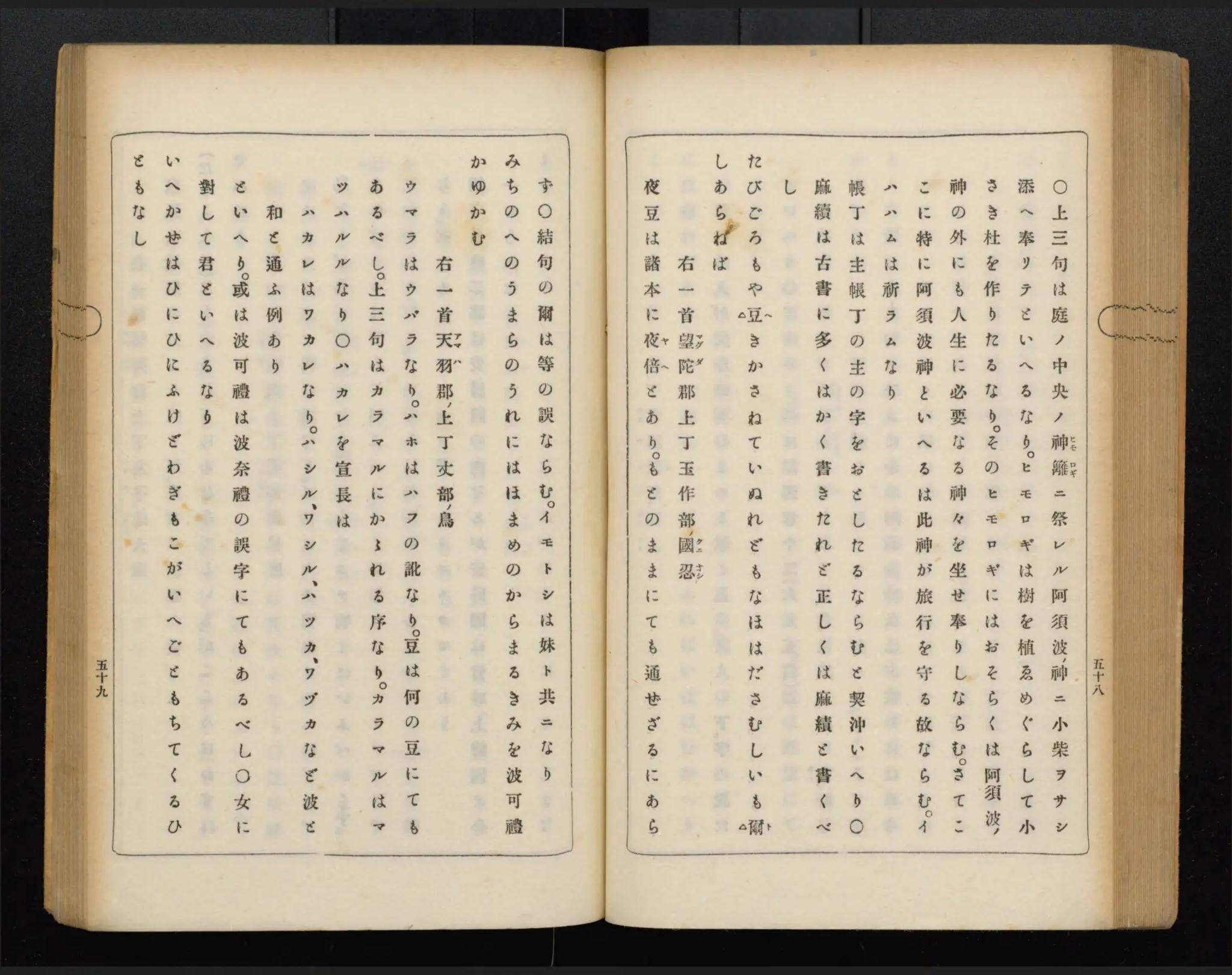
道の辺の うまらの末に 這ほ豆の からまる君を はなれか行かむ
Like creeping bean vines at the tip of the Multiflora Rose by the roadside, you cling to me. How could I ever leave you behind?
— 丈部鳥(Hasetsukabe no Tori)、万葉集 巻二十 4352 Manyoshu (Collection of Ten Thousand Leaves), the oldest existing anthology of Japanese poetry compiled around 759 AD.
Related Articles
Beyond “Us and Them”: Pigment Making with Invasive Plants

Whether we like it or not, invasive species are (most likely) here to stay. We can’t dismiss their real ecological harm, but viewing them as abstract “enemy aliens” does not address the underlying reasons for their presence. I have felt that a more nuanced, multi-dimensional understanding of these species is needed, because short-sighted decisions in the past that failed to consider the complex dynamics of ecosystems are the very reason for their arrival and persistence.
Creating Artwork Guided by Farmers: Collaboration with Hawthorne Valley Farm

A new art project for Hawthorne Valley Farm's Biodiversity Trail using invasive plants, inspired by the farm's living ecosystem, and 100-year-old poems.