

Beyond “Us and Them”: Pigment Making with Invasive Plants
Pursuing a shift in mindset that replaces hate and fear with a productive, experimental relationship.

Whether we like it or not, invasive species are (most likely) here to stay. We can’t dismiss their real ecological harm, but viewing them as abstract “enemy aliens” does not address the underlying reasons for their presence. I have felt that a more nuanced, multi-dimensional understanding of these species is needed, because short-sighted decisions in the past that failed to consider the complex dynamics of ecosystems are the very reason for their arrival and persistence.
There is no shortcut to “solving” the issue of invasive species. Instead, we can begin by reflecting on our mindsets that demand quick answers or easy labels, so we don’t make similar mistakes in the future. Hate and fear of any kind need to be replaced with a productive, experimental relationship.
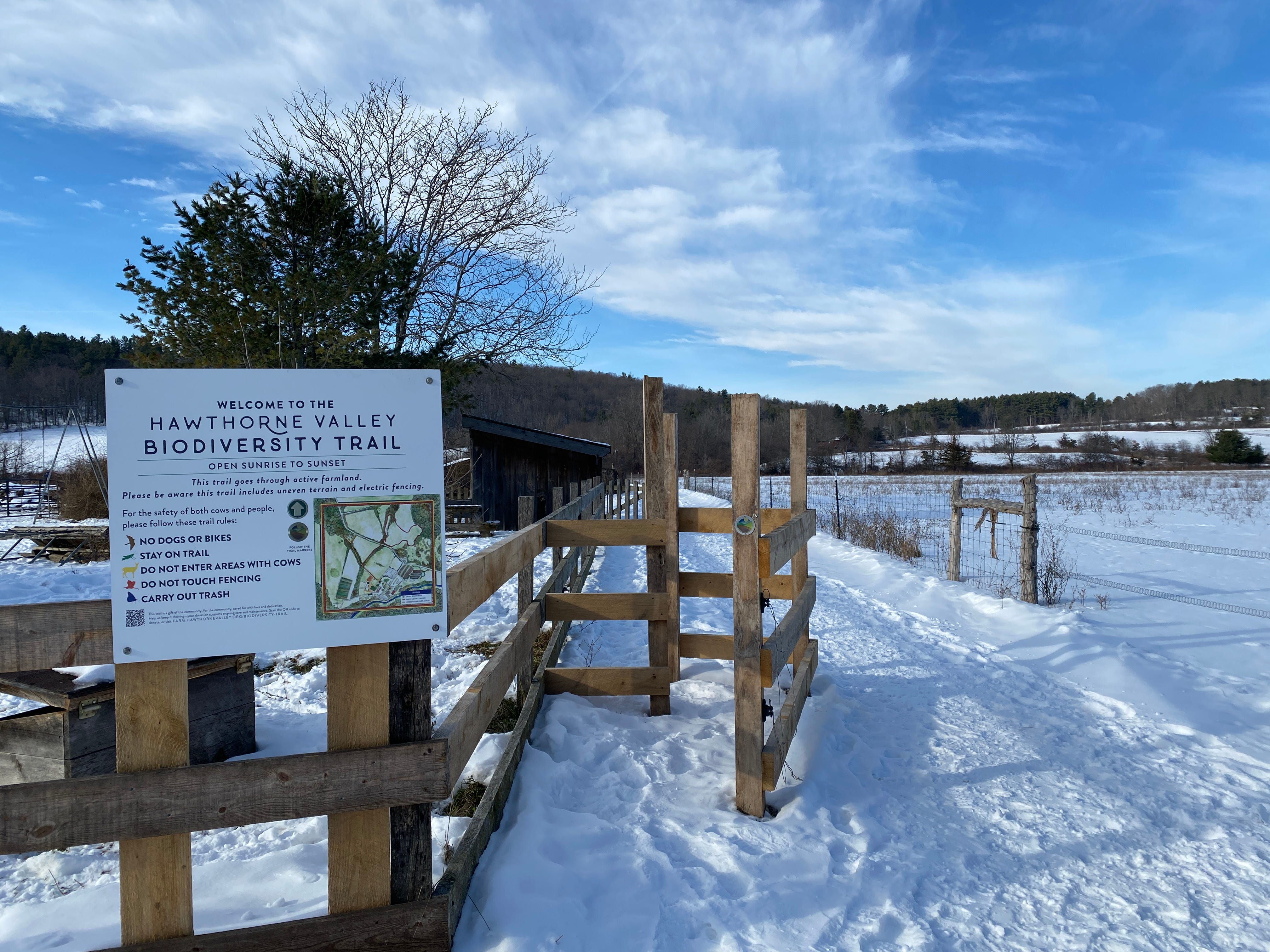
This is the theme I am pursuing through this project for the Hawthorne Valley’s Biodiversity Trail. I’m happy to find a positive use for these plants, many of whom share the homeland with me, no matter how small. This is a further development of my experiment with non-native plants from 2023.
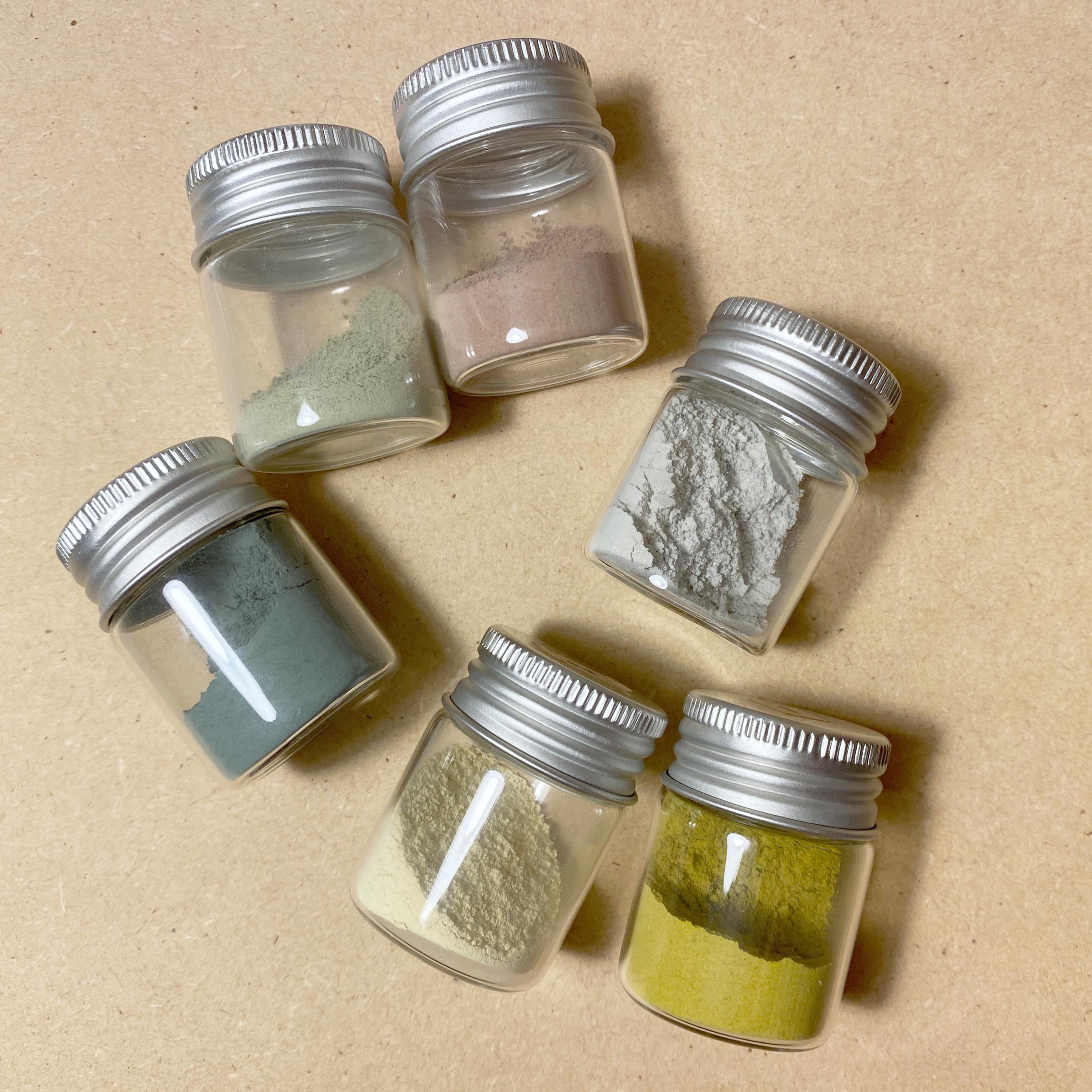
There are so many things you can do with these plants and many variations to experiment with. I am excited to continue working with them and am looking forward to the final result: an outdoor installation along the Biodiversity Trail which will be installed in spring 2027.
Related Article

A new art project for Hawthorne Valley Farm’s Biodiversity Trail using invasive plants, inspired by the farm’s living ecosystem, and 100-year-old poems.
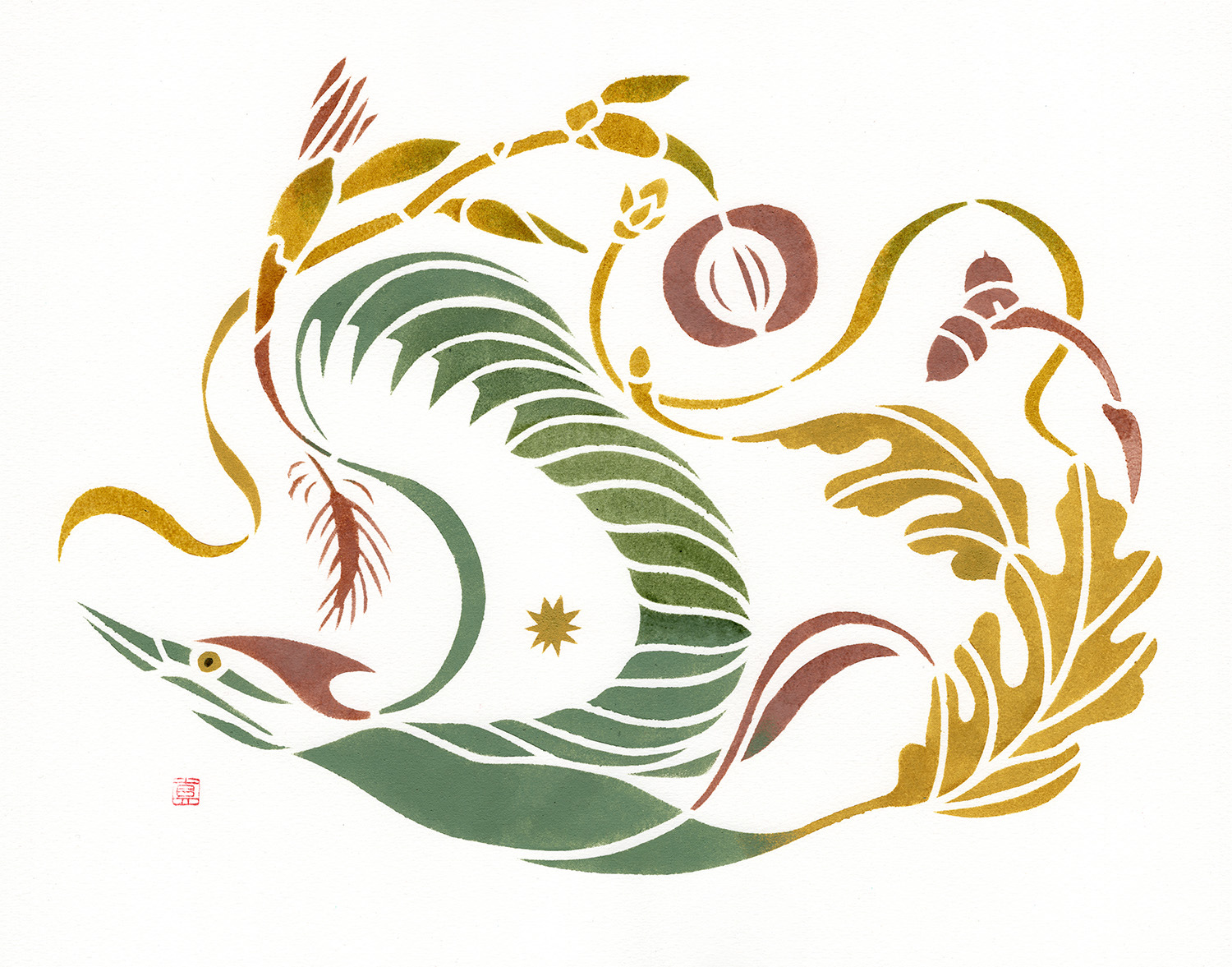
The inspiration for the stencil painting above came from birding there on December 16th.
As I was walking toward the woody part of it, I felt that there might be a Pileated Woodpecker in there. At first it was quiet, but eventually chickadees and titmice started to call.


Then a group of juncos and bluebirds appeared. I heard a White-breasted Nuthatch laughing. And then drumming: two Red-bellied Woodpeckers, two Downy Woodpeckers, and a Yellow-bellied Sapsucker. I waited a bit longer, and sure enough, a Pileated Woodpecker arrived.
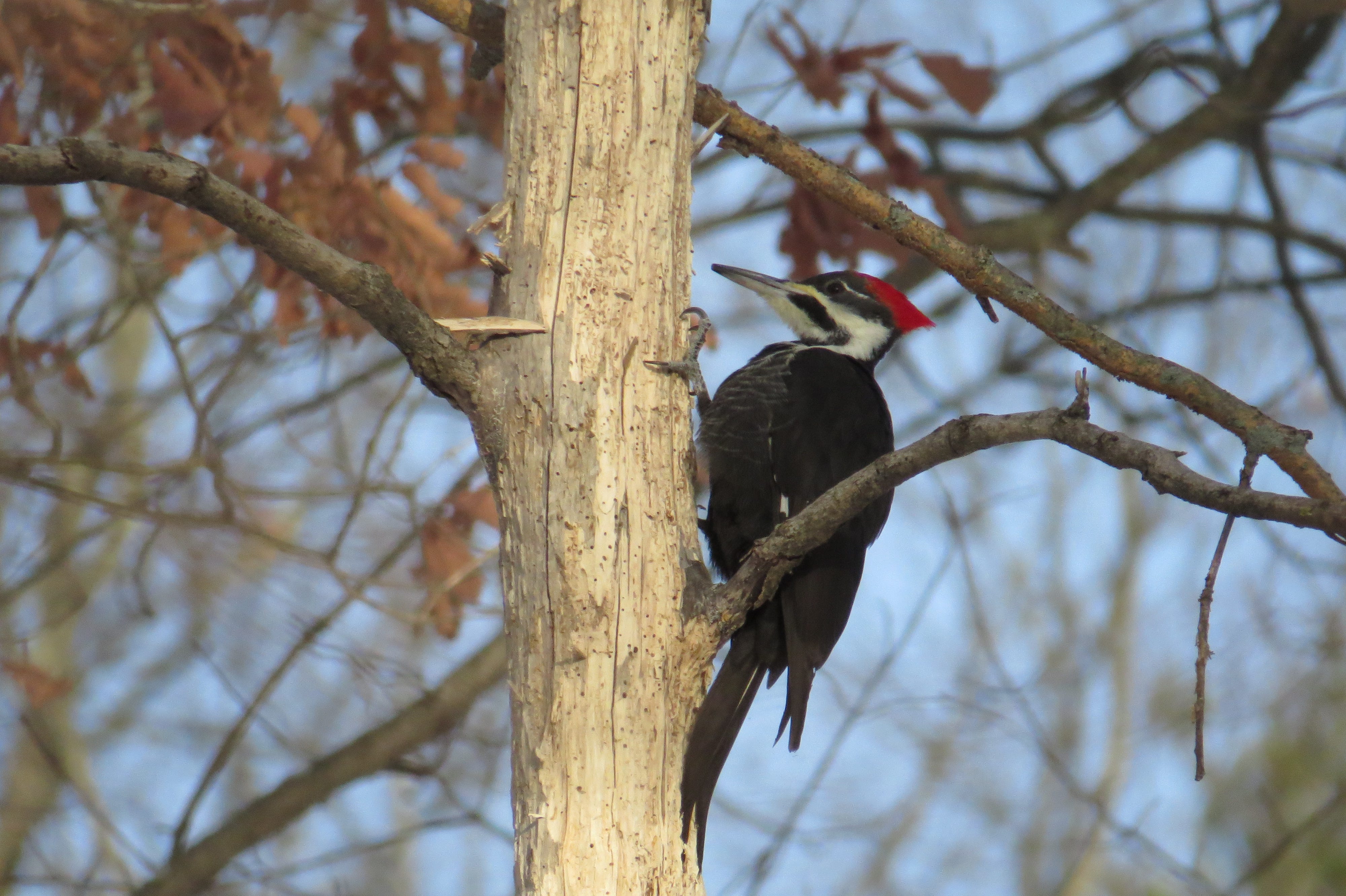
I think I may have started to understand what intuition is made of. All the rich information you receive through your five senses, if your brain is not attuned to it, would be filtered out as unimportant. But when you learn the meanings of subtle cues, your brain can make sense of them. There’s something humorously over the top about the Pileated Woodpecker, both in the way it calls and drums. My ears must have received its sounds from afar, combined with the habitat my eyes were seeing, culminating in this vague feeling of “there must be a Pileated Woodpecker in here.”
Some other birds’ signals are often more subtle than those of the Pileated Woodpecker, and I imagine that the more experienced you are, the more such cues your brain can pick up before you can verbalize them. You get the feeling. That seems to me to be what intuition may be.


And perhaps that also explains many mysterious moments I remember from Japanese folklore, where the supernatural speaks to humans, warning, breaking news, etc. People in the old times must have been more attuned to the natural world than we are, as their lives were depending on it. I’m reminded of a story, The Magical Listening Hood, that allows a man to understand what wild animals say. I wonder if it was explaining what intuition is, in the language of folklore.
Beautiful writing, especially re intuition, taking in through the 5 senses.
I like your innovative and constructive approach of making something good out of something bad or unwanted namely the invasive plants. They are here to stay. Seeing them used in your artwork helps put this in a positive light.